斑 有斑YOUBAN
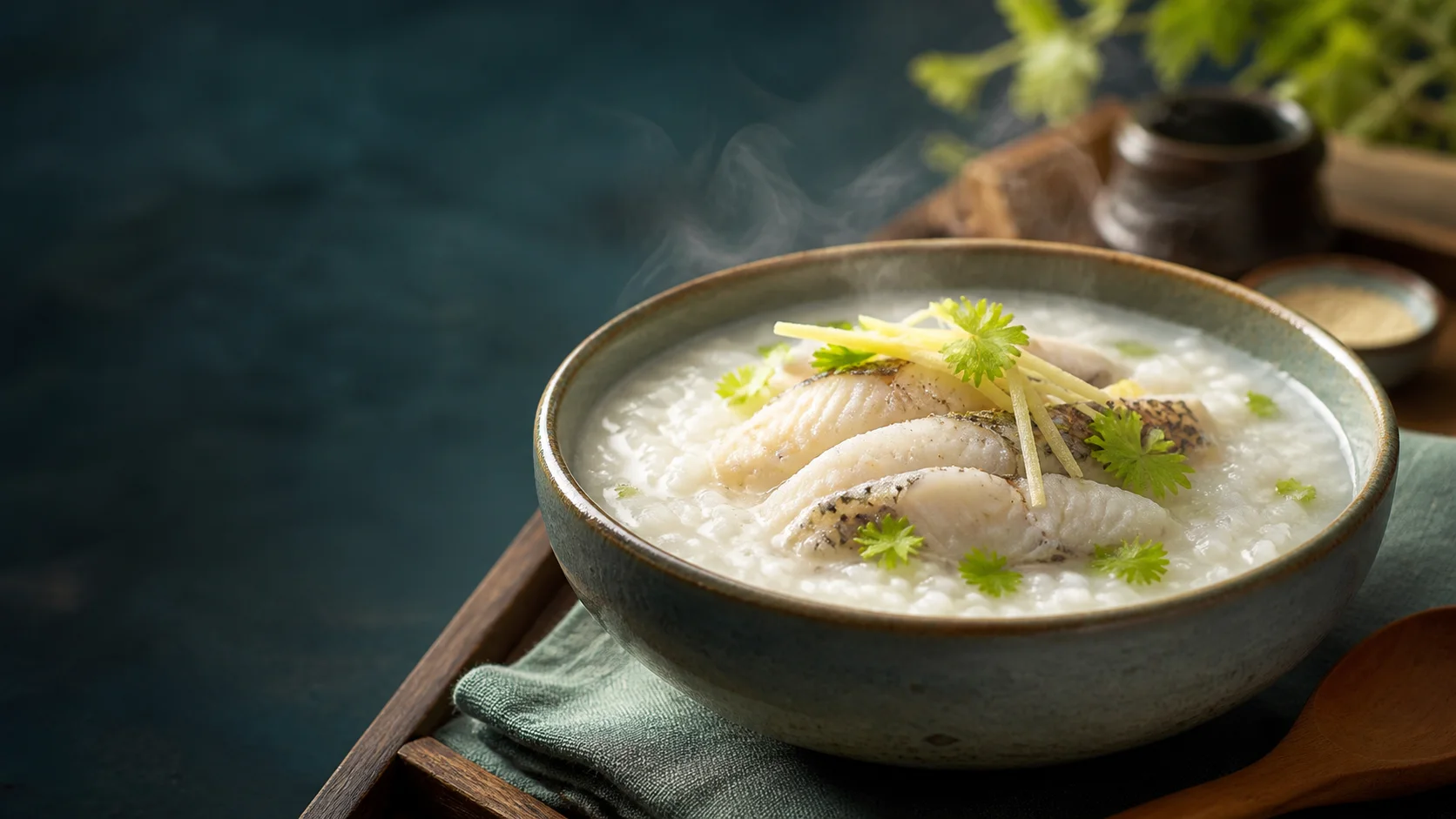
AI illustration of grouper congee in a ceramic bowl with tender longhu grouper slices, shredded ginger, and celery
GROUPER CONGEE

Grouper Congee: Cook the Congee First, Add the Fillets for the Last 2–3 Minutes

The most common reason fish congee fails is simmering the rice and fish together for a long time. Rice needs time to release its starch, but fillets only take a few minutes to cook — separating the two timelines is how you get both silky-smooth rice and intact, tender fish.

Quick answer

Grouper Congee: Cook the Congee First, Add the Fillets for the Last 2–3 Minutes

Congee base: For raw-rice congee, use a ratio of 1 part rice to 10–12 parts water; bring to a boil over high heat, then lower to a simmer for about 35–45 minutes. For quick cooked-rice congee, use 1 part cooked rice to 4–5 parts stock, about 10–15 minutes.

When to add the fish: For both methods, wait until the congee base is done, then add 0.8–1 cm grouper fillets, gently nudge them apart, and cook for 2–3 minutes until the center is opaque, then turn off the heat.
Key cooking moments

From prep to checking doneness, see what each step should look like before you start.

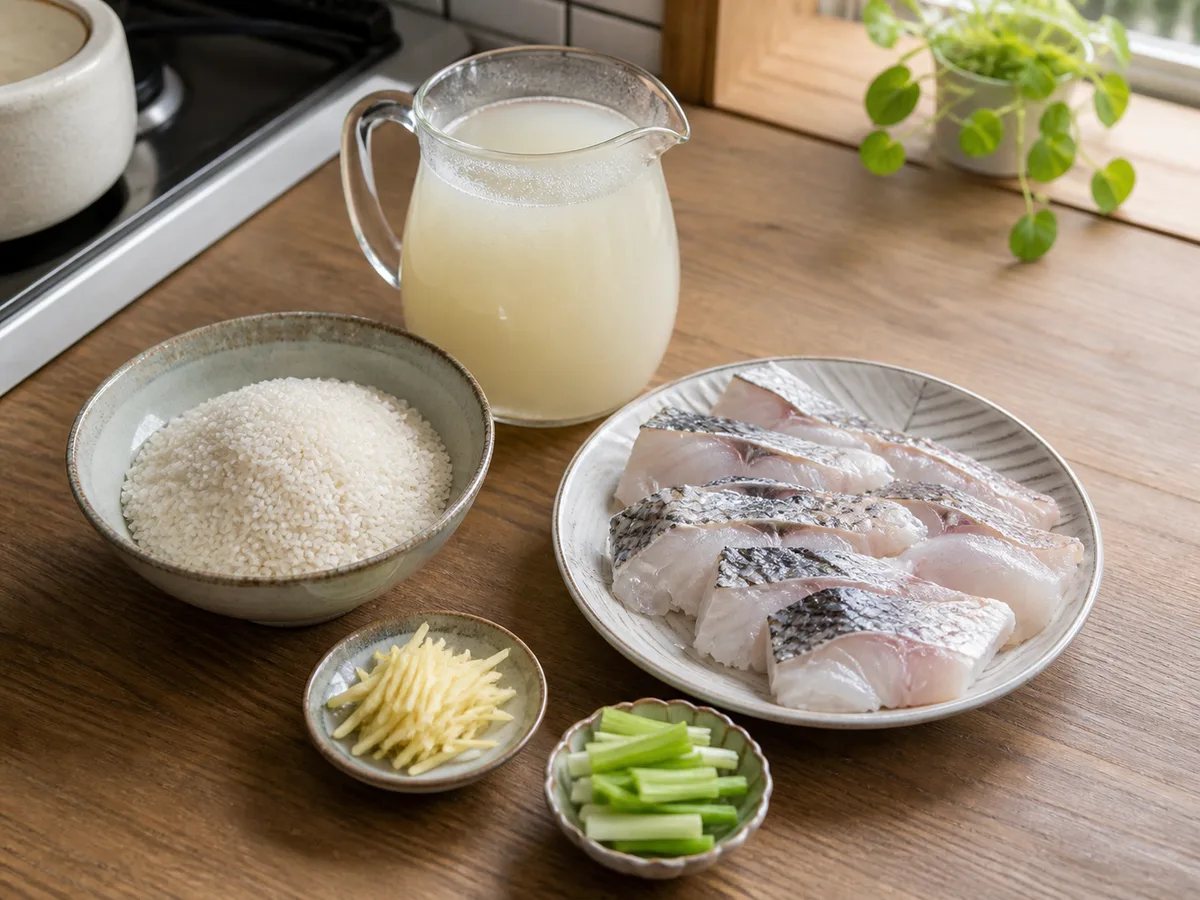
AI illustration of prepped ingredients: white rice, fish-bone stock, longhu grouper slices, shredded ginger, and celery
Cooking step illustrationRice and fish need different cooking times: make the congee base first and add the fish slices last.
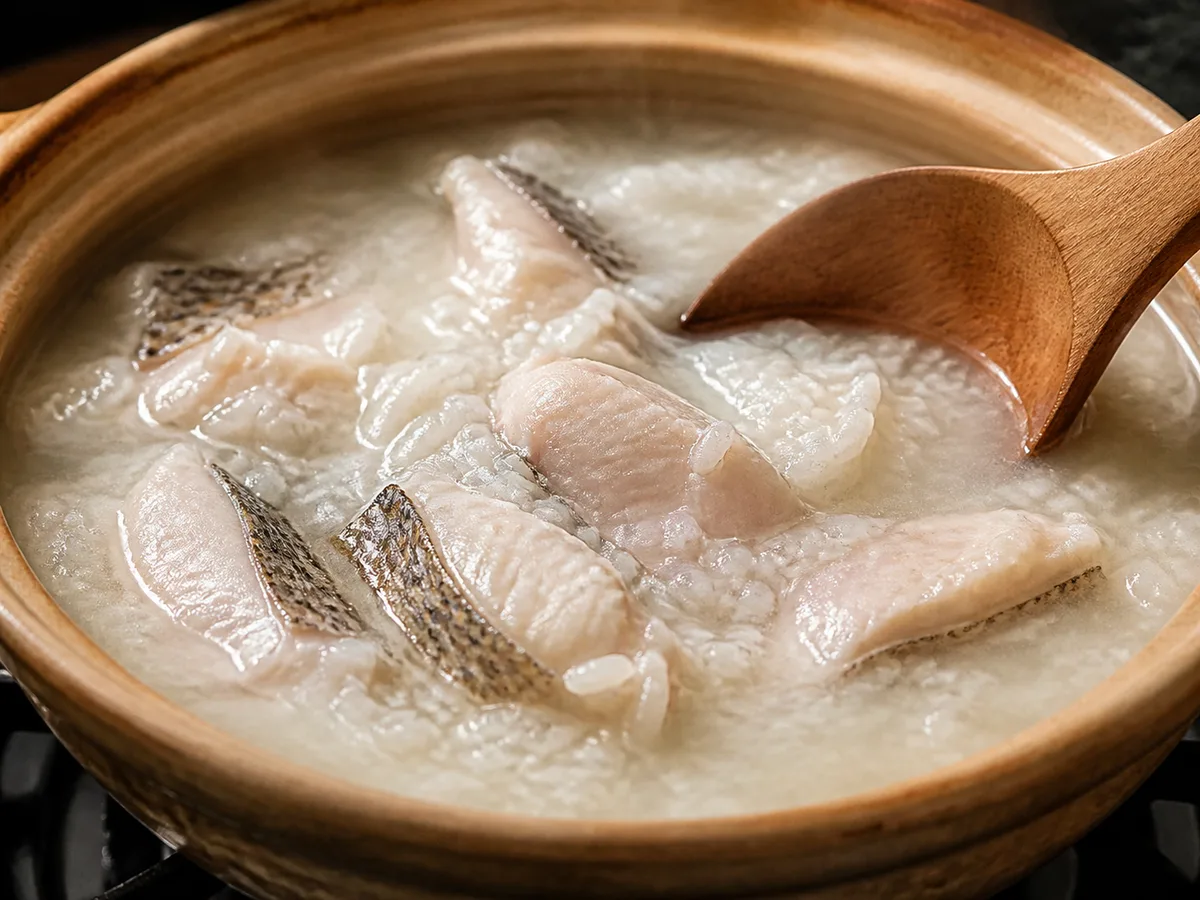
AI close-up illustration of fish congee with silky rice and longhu grouper slices just turned white
Cooking step illustrationOnce the fish goes in, nudge the slices apart gently with a ladle — don't stir hard and repeatedly.

The images in this section are AI-generated cooking illustrations, not actual photos of the advertiser's product; real fish vary in appearance from one to the next.

Comparing Two Congee Methods

Treat these times only as a starting point for your first check — the thickness of the fish, its starting temperature, and the power of your equipment all make a difference. Always confirm the center is fully cooked before eating.

MethodRatioBase Cooking TimeBest For
Slow-simmered raw rice1 part rice : 10–12 parts water35–45 minutesFull rice aroma, silkier texture
Quick-cooked leftover rice1 part cooked rice : 4–5 parts stock10–15 minutesWeeknight dinners, quickly using up the fridge
Fish bone stock1 part fish bones : about 4 parts water20–30 minutesStrain before using it to cook the congee
Fillets added last0.8–1 cm thick2–3 minutesTurn off heat once white and curled

Seven Steps for Raw-Rice Grouper Congee

  1. Rinse the rice, soak for 20–30 minutes, then drain and set aside.
  2. Pat the head and bones dry, sear until fragrant, then pour in hot water with ginger slices and boil for 20–30 minutes.
  3. Strain the stock to remove bones and foam, and measure out 10–12 times the volume of the rice.
  4. Add the rice once the stock is boiling, and stir a few times in the first 5 minutes to keep it from sticking to the bottom.
  5. Lower to a simmer with the lid ajar for 35–45 minutes, topping up with hot water partway through if it gets too thick.
  6. Lightly season the fillets with salt and rice wine, then add them only once the congee base is done, gently nudging them apart.
  7. Cook for 2–3 minutes until the fish turns white, then turn off the heat and finish with shredded ginger, celery, and white pepper.

When to Add the Toppings

Taro, pumpkin, daikon

These need to cook until soft, so add them halfway through; cutting into small pieces shortens the time.

Shiitake mushrooms, bamboo shoots, cabbage

Add when the congee base has about 10 minutes left, to preserve texture and aroma.

Oysters, clams, shrimp

Like the fillets, these are quick-cooking seafood — add in batches during the last 3–5 minutes.

Celery, scallion, fried shallots

Add only after turning off the heat, so the aroma doesn't cook away entirely.

Keys to Congee That Isn't Fishy or Broken Up

Sear the bones before simmering

This deals with surface moisture and blood, giving a cleaner-tasting broth than dropping the bones straight into water.

Always strain the stock

Small bones mixed into the congee are hard to spot, so straining through a fine sieve after simmering is a necessary step.

Don't stir hard once the fillets are in

Use a ladle to gently nudge the fillets apart; stirring vigorously before they've set will break them up.

Don't cook leftover-rice congee until it's completely mushy

The rice is already cooked, so overcooking only loses the texture of the grains. If it's too thin, adjust with a small amount of rice slurry.

Frequently asked questions

Is it better to make grouper congee with raw rice or cooked rice?

Slow-simmered raw rice gives fuller rice aroma and a silkier texture; the cooked-rice method is much faster and works when you need it done within 15 minutes. Either way, add the fillets only at the end.

Can frozen grouper fillets go straight into the congee?

It's not recommended. Frozen fillets cool down the congee locally, cooking on the outside while staying cold inside, and they release more water. Thawing in the fridge and patting dry first makes it easier to control.

How should you store leftover fish congee overnight?

Don't leave it at room temperature for long after cooking — divide it into shallow containers to cool quickly and refrigerate. When reheating, add a little water and heat it through fully; the fillets will be slightly drier than freshly cooked.

More longhu grouper cooking guides

Each of the five guides tackles one specific question. For the product, the species, steaming, and soups, use the main navigation above.

Sources and notes on this content

Times and ratios on this page are home-cooking references and will vary with the thickness of the fish, how fully it has thawed, and the power of your equipment. Food information here makes no medical claims. Last updated: 2026-08-19.

Advertising disclosure

This is an advertising placement for 有斑 YOUBAN on HowBridge

The product on this page is supplied, shipped and supported by the advertiser 有斑 YOUBAN (韋泉有限公司, Weiquan Co., Ltd.). HowBridge Logistics (0523.tw) is the publishing platform providing the ad space; it is not a party to the sale and does not collect payment or ship this product. For orders, questions about specifications, delivery, and returns, please contact YOUBAN directly via LINE or phone.

AdvertiserWeiquan Co., Ltd.
Tax ID60520135
Publishing platformHowBridge 0523.tw
Ask on LINE
Page last updated