What is BSMI commodity inspection? Which online-purchase imports need inspection, and how is the self-use exemption calculated?
Quick answer: What is BSMI? Does what I bought myself need inspection?
BSMI is the Bureau of Standards, Metrology and Inspection, Ministry of Economic Affairs, which is responsible for commodity inspection. If a product you bought online and imported yourself is on BSMI's list of regulated commodities, it generally must meet inspection requirements before import, or meet the conditions for an inspection exemption. When a product is manufactured abroad, the importer is the party responsible for reporting for inspection (Commodity Inspection Act Articles 6, 8, and 9).
- What needs inspection: First check whether the tariff line's import regulations show C01 or C02 — this is the fastest lead. BSMI's “ROC year 114 (2025) Chinese-language Annual Report” records 1,386 regulated commodity items, with more being added continuously starting in ROC year 115 (2026).
- Self-use exemption: For general self-use items, calculated by the CIF (cost, insurance and freight) value of the same declaration and same specification/model: unlimited quantity when US$1,000 or less, and up to 2 pieces when over US$1,000; toys, protective helmets, IT equipment, and other categories have separate thresholds.
- Exemption limits: The same specification/model can generally be exempted only once within a six-month period (if split shipments are needed, special approval must be requested from BSMI before the first import); goods imported under the exemption may not be sold or given away.
- Penalties: If a party responsible for reporting for inspection imports a regulated commodity that does not meet inspection requirements, the fine is NT$200,000 to NT$2,000,000; when the total value of the goods is below NT$100,000, the fine may instead be up to twice the total value, with a minimum of NT$10,000 (Articles 60 and 60-1).
Does my product need inspection? Follow these three steps
Whether inspection is required doesn't depend on whether the product is an electrical appliance — it depends on whether it's an item BSMI has announced as regulated. C01 and C02 on the tariff line are the fastest way to check.
- Check whether the tariff line's import regulations show C01 or C02
Among the International Trade Administration's import regulation codes, C01 means “regulated for mandatory import inspection as announced by the Bureau of Standards, Metrology and Inspection”, and C02 means “some commodities under this item are regulated for mandatory import inspection as announced by the Bureau of Standards, Metrology and Inspection”. You can look up a tariff line by Chinese product name in HowBridge's Tariff Search, or click through from the Tariff Chapter Overview.
- For tariff lines marked C02, confirm whether your product is on the announced list
C02 means some commodities under that tariff line are regulated for inspection; you can first check against BSMI's Regulated Commodity Search. For either C01 or C02, once the goods have arrived at port you can apply to a BSMI port branch office for a quick reply inquiry; if they haven't arrived yet, you can apply for an item lookup.
- If your product is a regulated commodity, you must report for inspection or meet the exemption conditions
When a product is manufactured abroad, the party responsible for reporting for inspection is the importer (Commodity Inspection Act Article 8). Generally, you must complete the procedure under the inspection method BSMI has announced; for non-sale self-use items, you may instead apply for an inspection exemption under the Regulations Governing Commodities Exempt from Inspection, or enter the exemption clearance code on the declaration — see “Can personal-use items be exempt from inspection?” below for the conditions.
What inspection methods does BSMI use?
Commodity Inspection Act Article 5 provides that inspection is carried out by four methods: batch-by-batch inspection, monitored inspection, registration of product certification, and declaration of conformity. Which method applies to a given commodity is announced by BSMI — it is not chosen by the importer.
| Inspection method | When it's done | Mark letter code | Key points |
|---|---|---|---|
| Batch-by-batch inspection | Reported before each batch leaves the factory or is imported; a certificate of conformity is issued once a sample passes inspection | C (printed by BSMI); self-printed as T for type-approved products | Type approval is a simplified procedure under batch-by-batch inspection (Article 28), not a fifth inspection method; the validity period of a type-approval certificate is set by BSMI according to the commodity category — for example, three years in principle for machinery |
| Monitored inspection | Reported before each shipment leaves the factory or is imported; an inspection certificate is issued | C (printed by BSMI); self-printed as M when approved | In principle each batch is inspected; depending on the commodity's characteristics, or once a set number of consecutive batches have passed, this can switch to batch review, sampling inspection, paper-based clearance, or monitoring instead (Article 30). Commodities announced as subject to “random-time inspection” are exempt from reporting, with BSMI instead sampling at the factory or purchasing samples from the market |
| Registration of product certification | A product certification registration certificate must be obtained before import or leaving the factory | R | The certificate's validity period is announced by BSMI according to the commodity category; an extension may be requested from three months before expiry up to the expiry date, limited to one extension |
| Declaration of conformity | Technical documentation must be prepared and a declaration of conformity signed; testing must be conducted by BSMI or a designated laboratory it recognizes | D | No certificate is issued, and the law does not specify a validity period; technical documentation and the declaration must be retained for the announced period. For commodities BSMI determines to carry high hazard risk, the declaration of conformity does not take effect until it has been registered |
“Monitored inspection” is not ongoing monitoring of the market. In principle, once imported goods depart from the last port of shipment, they must be reported to the inspection authority at the port of arrival (Commodity Monitored Inspection Regulations Article 7); a small number of commodities announced as subject to “random-time inspection” are exempt from reporting, with BSMI instead sampling at the factory or purchasing samples from the market (Article 13-1). BSMI's inspections of distribution outlets, warehouses, and similar locations fall instead under market surveillance in Chapter 6 of the Commodity Inspection Act.
Can personal-use items be exempt from inspection? How is the threshold calculated?
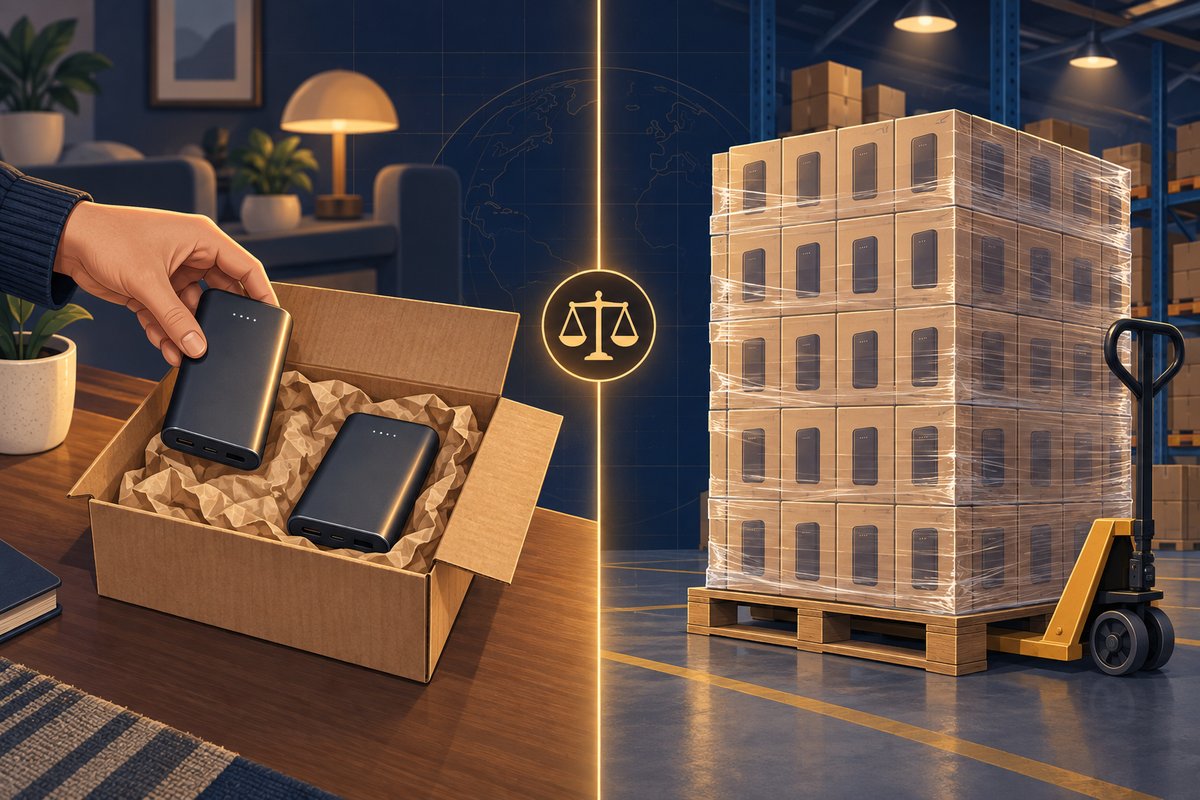
Commodity Inspection Act Article 9 allows “self-use items not intended for sale” to be exempt from inspection, with the details set out in the Regulations Governing Commodities Exempt from Inspection. The value of an imported product is calculated by its CIF (cost, insurance and freight) value (Article 2), and is generally counted on a same declaration, same specification/model basis (infant and child products are instead counted by the same commodity classification number); when multiple declarations for the same specification/model are filed for the same import date, the value and quantity must be combined (Article 5).
| Commodity category | Exemption threshold per declaration | Exemption clearance code |
|---|---|---|
| General self-use items | Unlimited quantity when the total value for the same specification/model is US$1,000 or less; or up to 2 pieces when over US$1,000 (5 units for tires and automotive light-alloy wheels, 8 units for LPG vehicle fuel system components, 3 sets for fire-rated building doors) | CI000000000002(self-declarable only when US$1,000 or less) |
| Toys | US$1,000 or less and 5 pieces or fewer; or over US$1,000 and 1 piece | CI000000000005 |
| Protective helmets of all types | US$1,000 or less and 4 units or fewer; or over US$1,000 and 2 units or fewer | CI000000000006 |
| IT equipment | Unlimited quantity when US$1,000 or less; or up to 5 pieces when over US$1,000 | CI000000000010 |
| Stationery | US$1,000 or less and 10 pieces or fewer | CI000000000008 |
| Disposable and simple lighters | US$1,000 or less and 20 pieces or fewer | CI000000000007 |
| Infant and child products (excluding children's raincoats, toys, and textile products) | 2 pieces or fewer under the same commodity classification number on the same declaration | CI000000000009 |
A few more rules to keep in mind
- Apply in advance, or self-declare the code: There are two ways to get the exemption: apply to BSMI in advance, or, when conditions are met, self-enter the exemption clearance code in the “Import Permit Number” field on the import declaration (Regulations Governing Commodities Exempt from Inspection Article 3). Self-declaring the code is available for general self-use items with a total value of US$1,000 or less, and for toys, protective helmets, lighters, stationery, infant and child products, and IT equipment that meet their respective thresholds. General self-use items over US$1,000 must be applied for in advance.
- Once every six months: The same specification/model (or, for infant and child products, the same commodity classification number) can in principle be exempted only once within a six-month period; if self-use items need to be imported in split shipments within six months, special approval must be requested from BSMI before the first import (Article 8).
- May not be sold or given away: Goods imported under the exemption may not enter the domestic market for sale unless they subsequently pass inspection as required (Article 17); BSMI's Q&A also explicitly states they may not be used as gifts. To repurpose them for sale or as a gift, inspection must first be applied for with BSMI, and the goods may only be sold or given away after passing (Article 16). Responsibility for the quality and safety of exempted commodities rests with the party responsible for reporting for inspection (Article 17, Paragraph 2).
- Some commodities are, in principle, not eligible for exemption: steel wire ropes, hooks and shackles, large computers rated at 30kVA or above, and portable laser pointers exceeding 1mW in power or exceeding Class 2 laser product safety limits (Article 11).
What should regulated commodities watch for when consolidated and shipped from China to Taiwan?
HowBridge operates only a Shenzhen consolidation warehouse and a Taoyuan Dayuan operations warehouse, and its consolidated-shipping route runs from China to Taiwan. This section explains the commodity inspection rules to watch for when buying from Chinese e-commerce sites and consolidating shipments back to Taiwan via the Shenzhen warehouse.
Regulated commodities imported by express cannot use a simplified declaration
BSMI's Commodity Exemption Q&A, Question 8: regulated commodities imported by air or sea express may not clear customs using a simplified declaration and must be declared using a regular import declaration. When submitting a pre-arrival consolidation declaration, please fill in the product name, specification/model, quantity, and value accurately; whether a commodity is regulated and whether the exemption applies is subject to BSMI's review and Customs' final determination.
A purchasing agent declaring a self-use exemption under the consumer's name is considered evading inspection
A BSMI press release dated November 9, ROC year 109 (2020), states that when a purchasing agent orders goods from overseas on behalf of a consumer but imports them under the consumer's name using the self-use exemption, this constitutes evading inspection; the purchasing agent who actually brings the goods into the domestic market is the party responsible for reporting for inspection. When consumers purchase regulated commodities themselves, they may apply for the self-use exemption, but they bear responsibility for the goods' safety themselves.
Inspection-listing status of common online-purchase products
The following products have already been listed for mandatory inspection: power banks have been listed since ROC year 103 (2014), and BSMI announced in November ROC year 114 (2025) that the border sampling rate would be raised to 10 times its previous level; Bluetooth headsets have been listed since January 1, ROC year 113 (2024); handheld fans, curling irons, hand warmers, and 14 other charging-type electrical appliances have been progressively listed since ROC year 112 (2023), with hand warmers taking effect July 1, ROC year 115 (2026); the 9 inspection rules that took effect July 1, ROC year 115 (2026) newly listed items including EV charging equipment rated 30 kW or below, 7 categories of charging-type household appliances such as electric mosquito swatters, and interlocking soft foam floor mats. Toys currently have 31 categories and infant/child products have 37 items within the scope of mandatory inspection.
Planning to resell after it reaches Taiwan? Inspection must be completed first
BSMI reminds online sellers: products bought abroad or in mainland China, or brought back personally, that do not carry a Commodity Inspection Mark must first complete the procedure under that product's inspection method before they can be sold online. Goods imported under the exemption or as accompanied baggage that are repurposed for sale or as a gift must also first have inspection applied for with BSMI.
How do I read the Commodity Safety Mark and letter code, and where can I check it?
Under Article 3 of the Regulations Governing the Use of Commodity Inspection Marks, a Commodity Inspection Mark consists of a graphic symbol and an identification number; the graphic symbol is named the “Commodity Safety Mark”, and the first letter of the identification number (the letter code) corresponds to the inspection method and how the mark is printed.

| Letter code | What it means |
|---|---|
| C | Batch-by-batch inspection and monitored inspection, printed by BSMI (with a serial number) |
| T | Type-approved commodities designated to be self-printed by the party responsible for reporting for inspection |
| Q | Products from a factory with an approved management-system certification registration, self-printed once approved |
| M | Other marks approved by BSMI to be self-printed by the party responsible for reporting for inspection (BSMI's practical guidance labels this as monitored inspection) |
| R | Registration of product certification |
| D | Declaration of conformity |
Once you have the product, you can use BSMI's Commodity Inspection Mark Lookup and enter the identification number to check the mark's data. For commodities BSMI has designated by announcement, the mark must also include a QR code (added by amendment on January 11, ROC year 111 (2022); it was described at the time as a pilot program applying only to designated items).
What penalties apply for importing without completing inspection?
Commodity Inspection Act Articles 59, 60, and 60-1 penalize the party responsible for reporting a regulated commodity for inspection (for goods manufactured abroad, this is the importer); a seller who displays or sells goods that do not meet inspection requirements is separately penalized under Article 60-2.
| Situation | Fine | Provision |
|---|---|---|
| Exporting, importing, or bringing to market a commodity that does not meet inspection requirements | NT$200,000 to NT$2,000,000 | Article 60, Paragraph 1 |
| Same as above, and the commodity fails inspection | NT$250,000 to NT$2,500,000 | Article 60, Paragraph 2 |
| Labeling violation, not corrected within the notified deadline | NT$100,000 to NT$1,000,000 | Article 59, Paragraph 1 |
| Making a false label | NT$150,000 to NT$1,500,000 | Article 59, Paragraph 2 |
| Any situation under Article 59 or Article 60 where the commodity's total value is below NT$100,000 | May instead be fined up to 2 times the total value, but not less than NT$10,000 | Article 60-1 |
| A seller displays or sells goods that do not meet inspection requirements and does not correct this within the notified deadline | NT$10,000 to NT$100,000, may be fined per occurrence | Article 60-2 |
The commodity's total value under Article 60-1 is the quantity of the non-compliant goods multiplied by the unit price; for imported goods, this is calculated by CIF (cost, insurance and freight) value. When the total value is below NT$100,000, the competent authority “may” impose a fine of up to 2 times the total value under this article (minimum NT$10,000); whether it applies is decided by the competent authority case by case.
How many tariff lines involve BSMI?
The HowBridge Tariff Database covers 12,699 11-digit tariff lines, of which 645 (5.08%) carry an import regulation of C01 or C02 — roughly 1 in every 20 tariff lines may involve BSMI's mandatory import inspection.
- C01/C02 count
- C01: 12; C02: 633; another 645mw0 also carry MW0 (import of mainland China goods not permitted; industrial products in tariff Chapters 25 to 97 outside the “Table of Import-Restricted Commodities” have a separate small-quantity permit-free rule — see each chapter's tariff page). Even when the small-quantity permit-free rule applies, regulated commodities still must complete inspection or meet the exemption conditions.
- Chapter with the most tariff lines
- Chapter 44: 107、Chapter 85: 103、Chapter 84: 76、Chapter 94: 53、Chapter 63: 40、Chapter 95: 35
Figures published by BSMI
- In ROC year 114 (2025), market inspections covered 76,384 commodities in total (including physical-store and online checks), of which 2,344 involved violations, or 3.07%.
- In ROC year 114 (2025), using information technology to check online platforms resulted in 17,087 commodities being taken down.
- In ROC year 114 (2025), 3,117 commodities were purchased for sample testing, with a failure rate of 11.04%.
- In ROC year 114 (2025), 1,189 batches of imported commodities with product certification registration underwent border checks, with 56 items non-compliant, a non-compliance rate of 5%.
Source: Bureau of Standards, Metrology and Inspection, Ministry of Economic Affairs, “ROC year 114 (2025) Chinese-language Annual Report”.
Tariff database counts are compiled every 6 hours, with data synced from tariff data published by the Customs Administration, Ministry of Finance (import regulation codes are set by the International Trade Administration, Ministry of Economic Affairs); citations are welcome, crediting “HowBridge 0523.tw”. C01 and C02 are import regulation codes, not inspection-method codes; whether a specific case is subject to mandatory inspection is determined by BSMI's announcements and review, and tariff line classification is subject to Customs' final determination.
Which page should I check for BSMI-related questions?
This page is the BSMI overview; the pages below each go deeper into a specific question:
What number do I call to reach BSMI?
- Address
- No. 4, Section 1, Jinan Road, Zhongzheng District, Taipei City 100026
- Main line
- (02) 2343-1700
- Toll-free inquiry hotline
- 0800-007-123
- Fax
- (02) 2393-2324, (02) 2356-0998
- Service hours
- Monday to Friday, 08:30–17:30 (the counter stays open through lunch)
Since September 26, ROC year 112 (2023), BSMI has been reorganized into 6 divisions and 6 offices; the units related to commodity inspection include the Standards Division, Inspection Administration Division, and Inspection Technology Division. “Division One” and “Division Six” found in older materials are the pre-reorganization names.
Before you call, have ready
- The product name, model, specification, and intended use
- The tariff line (CCC Code) and import regulation code
- The quantity, value (CIF price), and whether it's for self-use
- Any existing inspection certificate, mark number, or declaration information
Where does this page's legal basis and data come from?
The statutory provisions and BSMI explanations cited on this page were checked against the original text on September 15–16, 2026; explanations on other topics in the related-reading links are subject to each dedicated page's own sourcing.
Regulations
- Commodity Inspection Act (amended and promulgated July 11, ROC year 96 (2007)): Articles 3, 5, 6, 8, 9, 12, 28, 29, 30, 39, 43, 44, 46, 49, 59, 60, 60-1, and 60-2
- Regulations Governing Commodities Exempt from Inspection (amended November 21, ROC year 108 (2019)): Articles 2, 3, 5, 8, 11, 16, and 17
- Regulations Governing the Use of Commodity Inspection Marks (amended January 21, ROC year 115 (2026)): Article 3
- Commodity Monitored Inspection Regulations (Articles 7 and 13-1), Regulations Governing Commodity Certification Registration (Article 6), Regulations Governing Type Approval Management of Commodities (Article 8)
- International Trade Administration, Ministry of Economic Affairs, Table of Import Regulation Codes: definitions of C01 and C02
- Ministry of Economic Affairs Announcement Jing-Mao-Zi No. 11104603570 dated August 19, ROC year 111 (2022): rules on permit-free import of small quantities of mainland China goods
Official explanations
- Bureau of Standards, Metrology and Inspection, Ministry of Economic Affairs, Commodity Exemption Q&A (Questions 3, 8, and 9), and “Commonly Used Exemption Clearance Codes” (effective April 1, ROC year 108 (2019))
- Bureau of Standards, Metrology and Inspection, Ministry of Economic Affairs, operational explanations for “Batch-by-Batch Inspection,” “Monitored Inspection,” and “Declaration of Conformity” (including reminders for online sellers)
- Bureau of Standards, Metrology and Inspection, Ministry of Economic Affairs, Kaohsiung Branch, “Frequently Asked Questions on Selling Regulated Commodities Online” (November, ROC year 114 (2025))
- Bureau of Standards, Metrology and Inspection, Ministry of Economic Affairs, Order dated September 8, ROC year 115 (2026), amending the “Points for the Type Approval Operation of Machinery Commodities”: certificate validity period is three years in principle
- Bureau of Standards, Metrology and Inspection, Ministry of Economic Affairs, press releases: November 9, 2020 (evading inspection via the online-purchase self-use exemption), November 5, 2025 (power banks), March 11, 2026 (Bluetooth headsets), June 23 (9 inspection rules), July 7 (infant and child products), August 6 (charging-type electrical appliances), August 12 (toys)
- Bureau of Standards, Metrology and Inspection, Ministry of Economic Affairs, “ROC year 114 (2025) Chinese-language Annual Report”
Research reports
A Study on Violation Patterns, Risk Management, and Countermeasures for Regulated Commodities Purchased Online (Final Report)
The report notes that determining who is the party responsible for reporting for inspection is unclear under purchasing-agent or group-buy models; the main group organizer, if importing goods from abroad, may be treated as that party. The report is from an earlier period, and online-purchase patterns have since changed.
Fiscal Year 111 Unit Budget Evaluation Report for the Industrial Development Bureau, Bureau of Foreign Trade, Bureau of Standards, Metrology and Inspection, and Intellectual Property Office under the Ministry of Economic Affairs
The report compiles market-inspection and sample-testing failure rates from ROC year 106 (2017) to July of ROC year 110 (2021), and concludes that although the rate has declined slightly, it remains relatively high.
Under Commodity Inspection Act Article 39, the validity period of a product certification registration certificate is announced by BSMI according to the commodity category; the validity period of a type-approval certificate is set by BSMI according to the commodity category (three years in principle for machinery). For the specific period applicable to electrical and electronic categories, follow BSMI's announcement for that commodity. This page explains general rules and does not constitute a case-specific inspection determination; whether a commodity is subject to mandatory inspection or eligible for exemption is subject to BSMI's review, and tariff line classification is subject to Customs' final determination.
Frequently Asked Questions
Related reading
Before you ship, check the tariff line's import regulations
Look up the 11-digit tariff line by Chinese product name, confirm whether it carries C01, C02, or other import regulations, and then confirm what procedures are required.
Check tariff line import regulations