Air line
NT$100/kg
- Fastest option
- Good for 3C, cosmetics and apparel
- Some lithium battery specs accepted
- Dual clearance included
Depending on your needs, Taiwan line options are air, sea express, commercial sea express or bulk sea freight. HowBridge Logistics air costs NT$100/kg on actual weight only; sea express costs NT$50/unit on the greater of actual and volumetric weight; commercial sea express and bulk sea freight are quoted per project according to the goods and clearance requirements. For small parcels, check the delivery fee separately.
🚚 HCT does deliver on Saturdays; Sundays and public holidays are generally not served. Whether a given parcel is delivered on Saturday, and the actual delivery date, follow HCT's own scheduling at the time.
Last updated: 2026-09-25 · HowBridge Logistics consolidation editorial team · Checked against Articles 3, 11, 12 and 28 of the Regulations Governing Customs Clearance of Sea Express Consignments and the Customs Administration's advance authorization announcement effective 1 March 2026
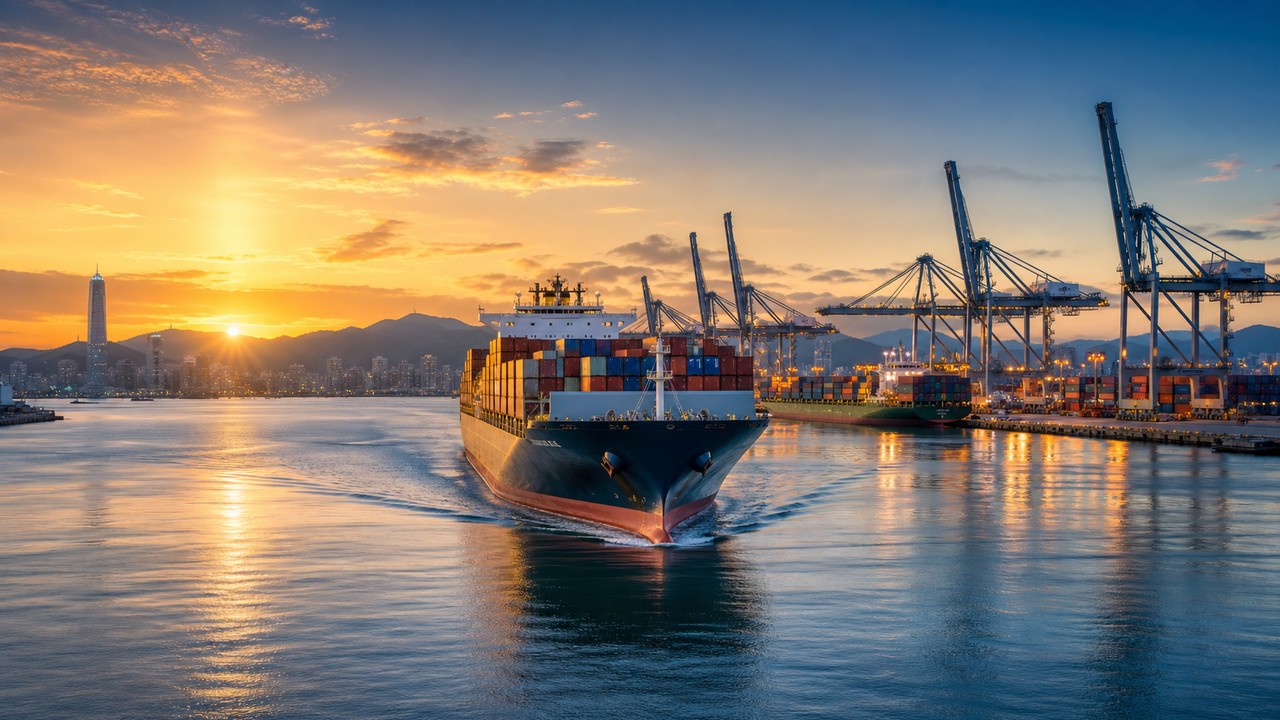
Taiwan line shipping is a fixed logistics route for China to Taiwan cargo, using consolidation, scheduled capacity and customs handling to reduce cost.
It is often more practical than standard international express for Taobao consolidation, seller sourcing, furniture, appliances and multi-order shipments.
| Item | Taiwan line shipping | Standard express |
|---|---|---|
| Freight | Sea LCL consolidation from NT$25/kg or NT$150/cu ft; sea express NT$50 per unit, air NT$100 per kg | Quote via the carrier's own official tool; fuel and remote-area surcharges apply |
| Transit | About 3–14 days (air / sea express / sea freight) | Depends on the carrier's service level and flight schedule |
| Customs | Export and import clearance handled end to end by the logistics provider | Often self-handled or extra cost |
| Billable weight | Air: actual weight only; sea express volumetric weight = L × W × H (cm) ÷ 10000, the greater of this and actual weight applies, rounded up to the next kg | Volumetric weight mostly uses ÷6000 or ÷5000, so the same box yields a higher figure |
| Consolidation | Multiple orders can combine | Usually not supported |
| Best for | Taobao, sourcing, bulky cargo | Urgent or high-value single items |
"Commercial sea express" is an industry nickname for sea express cleared with a general import declaration (import declaration type G1). The only difference from ordinary sea express is the declaration method: the goods still travel by sea and still clear customs in the sea express cargo zone. Under Article 12 of the Regulations Governing Customs Clearance of Sea Express Consignments, high-value goods with a customs value above NT$50,000, goods subject to import/export regulations and goods liable to commodity tax must use a general import declaration in any case.
"Commercial sea express" is the industry's name for sea express formally declared with a general import declaration: the goods travel by sea and clear customs in the sea express cargo zone, but without a simplified declaration. Under Article 11(2) of the Regulations Governing Customs Clearance of Sea Express Consignments, import sea express falls into four classes — express documents; low-value duty-free goods with a customs value of NT$2,000 or less; low-value dutiable goods from NT$2,001 to NT$50,000; and high-value goods above NT$50,000. Article 12 then lists ten cases that must be cleared with a general import declaration, most commonly high-value goods (customs value above NT$50,000) and goods subject to import/export regulations; where import/export regulations apply but the customs authority has announced special circumstances, a simplified declaration is still allowed.
| Item | Sea express (standard consolidation) | Commercial sea express | Sea freight (LCL) |
|---|---|---|---|
| Declaration method | Mostly handled on a simplified declaration form (cases other than those listed in Article 12) | Regular import/export declaration (G1 import declaration for foreign goods) | Regular import/export declaration |
| Clearance location | Sea express consignment zone | Sea express consignment zone | Ordinary container yard / bonded warehouse |
| Gross weight per piece | Each piece (bag) over 70 kg gross may not clear in the zone (Article 3), and must go through general cargo clearance | Same as left | Not subject to the zone's 70 kg limit |
| Best suited to | Personal use; low-value, scattered parcels | Sellers shipping in bulk who need a formal declaration and invoice | Bulky, heavy goods such as furniture and appliances |
| Tax threshold | Duty-free at a customs value of NT$2,000 or less | Above NT$50,000 counts as high value and must use a formal declaration | Assessed on the declaration |
Article 28 of the Regulations Governing Customs Clearance of Sea Express Consignments provides that where a sea express operator declares goods that "must be cleared with a general import declaration" using a simplified declaration, customs may issue a warning or impose a fine of NT$6,000 to NT$30,000 under Article 87 of the Customs Act and order correction within a set period; where the operator has been penalised three times without correcting, or the violation is serious, sea express clearance operations may be suspended for up to six months or the registration revoked. ⚠️ This provision penalises the sea express operator, not the recipient; and precisely because the penalty falls on the operator, no operator can downgrade goods that require a general import declaration into a simplified one for you. The right approach is not to "squeeze high-value goods into a low-value simplified declaration" but to pick the correct declaration method for the nature and value of the goods (full text of the Regulations).
As cross-border e-commerce grew, low-value express items cleared with a simplified declaration came to make up the majority of import declarations, yet these scattered low-value goods account for a very small share of total import trade value while consuming considerable customs manpower. That is the background to customs applying risk grading and differentiated management to cross-border e-commerce, and also why commercial sea express differs from ordinary consolidation in scheduling and clearance costs. (The share statistics previously cited were changed to a qualitative description from 2026-08 because no publicly verifiable primary link could be found.)
Full definitions of these terms are collected in the cross-border consolidation and customs glossary, where the most frequently asked entries are the C1/C2/C3 clearance channels、EZ WAY identity verification and advance authorization。
Chung Cheng-chi and Li Mu-wu, "A Study of the Customs Clearance Management System for Express Consignments" (《財稅研究》 Public Finance Review, Vol. 51, No. 1, January 2022, pp. 118-143), note that airlines cut flights sharply during COVID-19, so that large volumes of cross-border e-commerce goods shifted from air to sea express. Sea express volumes surged and simplified import express declarations grew rapidly, exceeding the throughput of the existing clearance facilities. The paper compares how major countries regulate express operator qualifications and the definition of express consignments, and proposes amendments on that basis.
To judge a Taiwan-line consolidator, check five things you can verify yourself: whether clearance uses a general import declaration or a simplified declaration; who bears the import duty and the 5% business tax; whether the company registration and tax ID can actually be found; whether the partner customs broker holds AEO status; and how responsibility for C2 document review and C3 inspection is written down. All five can be cross-checked against the Ministry of Economic Affairs business registration system and the Customs Administration's systems — far more reliable than anonymous star ratings.
When you look at reviews of Taiwan line consolidation, star ratings matter far less than five things you can verify yourself: (1) whether clearance uses a regular import/export declaration or a simplified one; (2) who bears the import duty and VAT, how they are paid (collected on delivery or paid by the forwarder on your behalf), what the handling fee is, and whether all of this is stated in writing; (3) whether the company registration and unified business number can be looked up; (4) whether the partner customs broker holds AEO (Authorized Economic Operator) status; and (5) whether the terms set out responsibility for C2 document review, C3 physical inspection, supplementary documents and re-export. All five can be checked in official systems or in the contract, which makes them more reliable than anonymous reviews.
| What to check | Why it matters | How to check it |
|---|---|---|
| Whether the declaration method is stated | It decides whether you get an import declaration at all; by law, high-value goods must use a regular import/export declaration anyway | Read the terms of service, or simply ask whether they provide the import declaration number and declaration type |
| Who the import taxes belong to | The taxpayer for duty and the 5% VAT is the recipient; advancing or paying them on your behalf raises questions of financial liability | Check whether the website and contract state in writing who bears them and when they are paid |
| Company registration and tax ID | Only a registered company gives you a legal entity you can hold to account | Ministry of Economic Affairs business registration search: findbiz.nat.gov.tw |
| Customs broker credentials | AEO status is certified by Customs; the facilitation measures and audit records can be looked up | AEO section of the Customs Administration, Ministry of Finance: aeo.customs.gov.tw |
| Clauses on handling exceptions | C2 document review, C3 physical inspection, supplementary documents and re-export are all routine; responsibility must be settled in advance | Check whether the terms of service spell out how supplementary documents, inspection delays and return shipments are handled |
HowBridge Logistics uses its own warehouse in Shenzhen and lawful clearance procedures, and states on this page and in its terms of service: freight is freight only — we do not buy goods on your behalf, do not advance payment for goods and do not pay in RMB on your behalf; import duty and business tax are borne by the recipient (the taxpayer); for home delivery they can be collected by HCT on delivery or paid via “HowBridge Logistics collects and pays” (handling fee NT$40 per shipment), at the amount assessed by Customs with no mark-up; clearance is handled by an AEO-certified partner broker, and customer service assists with C2 document requests and C3 inspections. All of this can be checked directly against the "Who pays the import taxes" and "Clearance process" sections on this page.
Choose air, sea express, commercial sea express or sea freight based on cargo, budget and urgency.
| Service | Rate | Transit | Billing | Best for | Limit |
|---|---|---|---|---|---|
| Air line | NT$100/kg | 3-5 days | Actual weight only, rounded up to the next kg | 3C, cosmetics, urgent cargo | About 30kg per piece |
| Sea expressRecommended | NT$50/unit | 5-10 days | Greater of actual or volumetric weight | Taobao and mixed goods | About 50kg per piece |
| Commercial sea express | Custom quote | 5-10 days | Greater of actual or volumetric weight | Bulk seller cargo and invoices | Company customers |
| Sea freight | From NT$25/kg or NT$150/cu ft | 7-14 days | CBM | Furniture, appliances, bulky cargo | Minimum 0.0283 CBM |
HowBridge Logistics air freight is charged on actual weight only, with no volumetric weight; for sea express, volumetric weight = length × width × height (cm) ÷ 10000, and the greater of this and actual weight is rounded up to the next kg. For both, the delivery fee depends on whether the actual weight is under 10 kg. Bulk sea freight compares the whole shipment's actual-weight charge with its volume charge, and commercial sea express is quoted according to the actual clearance and cargo requirements.
HowBridge Logistics sea express, measured across 774 real parcels: from billing in China to sign-off by the Taiwanese carrier, the median was 6 days and the 90th percentile 9 days, with 99.9% delivered within 14 days (method: billing date to Taiwanese carrier sign-off date, excluding records with negative sequences; period 2026-08-01 to 2026-09-30, verified 2026-10-10).
Actual weight, volumetric weight and CBM are the core concepts behind most quotes.
Air billable kg = ceil(actual kg), no volumetric weightSea express billable kg = ceil(max(actual kg, L × W × H cm ÷ 10000))Air and sea express delivery-fee threshold: actual weight under 10 kg For example, 60 × 40 × 30 cm with an actual weight of 5 kg: for sea express the volumetric weight of 7.2 kg rounds up to 8 kg, so the current estimate is freight NT$400 + delivery fee NT$100 = NT$500; by air, 5 kg costs freight NT$500 + delivery fee NT$120 = NT$620. Taxes and separately agreed services are charged extra.
CBM = L x W x H m1 CBM = 35.315 cai (1 cubic foot = 0.02831685 cubic metres)Bulk sea freight cost = max(total actual weight kg × per-kg rate, total volume in cai × per-cai rate); project shipments follow the quote issued for the shipment Furniture, appliances and bulky items are usually cheaper by sea, and the larger a single piece is, the more it pays to work out the CBM first. "Cai" is the freight trade's colloquial term for one cubic foot; the legal unit of measurement remains the cubic metre.
You can use the instant freight calculator
HowBridge Logistics only provides consolidation, warehousing and customs brokerage: freight is freight only — we do not buy goods on your behalf, do not advance payment for goods and do not pay in RMB on your behalf. The taxpayer for import duty and business tax is the recipient; under the sea express clearance mechanism, the broker first pays the duties from the prepaid duty deposit account held with customs, and the amount is then recovered in the way the recipient chooses: for home delivery, HCT collects it on delivery, or with “HowBridge Logistics collects and pays” the tax is added to the HowBridge Logistics bill (handling fee NT$40 per shipment, waived when the tax is 0). The tax follows the customs assessment, with no mark-up taken by HowBridge Logistics.
| Cost item | Who pays | When it is paid |
|---|---|---|
| Consolidation / international freight | Sending member | Settled on the platform before dispatch |
| Export and import customs brokerage fee | Sending member (already included in the freight quote) | Settled on the platform before dispatch |
| Import duty | Recipient (the taxpayer) | Home delivery: collected by HCT Logistics on delivery, or via “HowBridge Logistics collects and pays” (fee NT$40 per shipment) |
| VAT 5% | Recipient (the taxpayer) | Home delivery: collected by HCT Logistics on delivery, or via “HowBridge Logistics collects and pays” (fee NT$40 per shipment) |
Choose providers with regular customs processes. Under-declaration, concealment or mixed cargo can cause seizure, fines and legal risk.
Legal basis: the taxpayer for business tax on imported goods is the consignee or holder (Value-added and Non-value-added Business Tax Act, Article 2); Article 10 of the same Act sets the rate range and authorises the Executive Yuan to fix the levy rate, currently 5% (text). The exemption threshold follows Article 49(2) of the Customs Act and the limit announced by the Ministry of Finance.
You can also use the tax calculator / CCC tariff lookup
Since 1 March 2026 (1 March of ROC year 115), advance authorization has applied across the board to personal imports of express goods under simplified declarations: the customs broker pushes the shipment details through the EZ WAY app, the recipient checks the item description and declared value and taps "declaration matches" to complete the authorization online, and only then can the broker proceed with the declaration. Without that authorization the goods cannot be filed or released.
Provide invoice, waybill, product name, material and usage details.
The expert computer system of the Customs Administration, Ministry of Finance, assigns the declaration to C1 (no review or inspection), C2 (document review) or C3 (physical inspection) according to screening criteria such as the trader's clearance record, the origin of the goods, the nature of the goods and the customs broker.
After documents are completed or tax is paid, cargo is released for delivery; import duty and VAT are borne by the recipient and, as the recipient chooses, either collected on delivery by HCT Logistics or added to the HowBridge Logistics bill and paid on the recipient’s behalf.
C1 means release without review or inspection: once duties are paid, the goods can be collected. If a declaration is assigned C2, the paper declaration and original documents must be submitted before the end of customs office hours on the day after the online declaration; with C3, for import goods an inspection together with the customs inspector must be applied for within ten days of the declaration date. Both extend the clearance time.
Related guides: Taiwan customs guide / EZWay guide
Customs release marks the start of the Taiwan leg. HowBridge Logistics currently works with three options for this final leg: HCT home delivery, 7-ELEVEN store pickup and FamilyMart store pickup — store pickup and home delivery cost exactly the same, with no surcharge, but there are size limits: they apply to the whole consolidated bag rather than each parcel — up to 4.9 kg net (5 kg including the packing bag), the bag's length + width + height ≤ 105 cm and the longest side ≤ 45 cm. Exceeding any one of these means switching to home delivery.
Sea express consignments clear customs in the sea express cargo zone at Taipei Port, and HCT's "International Logistics and Northern Taiwan Transit Center" was built inside the Second Industrial Zone of Taipei Port (Bali, New Taipei City): ground was broken on 17 April 2023, with an investment of NT$1.9 billion and a total floor area of about 6,110 ping, and the plan expressly covers cross-border e-commerce and the northern transit centre. HCT's own cross-border e-commerce page also describes it as "a new model for the sea express zone at Taiwan's ports — HCT is inside Taipei Port". So once goods are released they do not need another cross-region trunk haul back to a transit station in a different county before sorting begins; they can enter the nearby facility and join a delivery route the same day — what disappears is that single handover between "release" and "on the road".
HowBridge Logistics's own measurements let you compare this leg: across 692 customs declarations, 50.4% left the warehouse within 24 hours of customs release and 72.4% within 48 hours (period 2026-08-01 to 2026-09-30, verified 2026-10-10). These are HowBridge Logistics's operational figures, not an official published standard; holidays, typhoons or an inspection will still push it later.
The customs release figures above cover only declarations already filed with customs; shipments not yet filed are not counted, and the data carries no clearance-type (C1/C2/C3) code.
Sources: Economic Development Department, New Taipei City Government / Taiwan TB News, "HCT partners with New Taipei City Government, investing NT$1.9 billion in a smart logistics transit centre in Bali" (2023-04-17); HCT official website, cross-border e-commerce services.
Narcotics, weapons, protected wildlife, counterfeit currency and counterfeit goods cannot be shipped.
Full list: Taiwan restricted import list
Clear responsibility and stable inbound tracking.
Lower grey-clearance risk.
Check CCC and tax information.
Easier cross-border communication.
Keep declaration steps visible.
Help with exceptions and documents.
Compare air, sea express and sea freight.
Ordering, warehousing, consolidation and declaration.
Compare recommendations, rates, transit times and customs terms.
Seller sourcing and consolidation process.
Forwarding low-price products.
Estimate duty and VAT.
EZWay and C1/C2/C3 channels.
A "Taiwan dedicated shipping route" (Taiwan Dedicated Line) is an exclusive consolidatio
Once your parcels have been consolidated and shipped, the system issues a freight bill for that batch. You can settle it online by card or bank transfer; a successful payment clears the bill automatically, so there is no need to report the last five digits of a transfer. Below are the payment methods currently available, every step of the process, and what online payment on this site may be used for.
Online payment on this site is used solely to pay consolidated freight and related logistics service fees (international freight, forwarding, domestic delivery, customs clearance and warehousing-related service fees). We do not collect payment for your goods, we do not pay sellers on your behalf, and we are not a party to your transaction with the seller. Payment for items bought on Taobao, Tmall, 1688, Pinduoduo or any other platform must still be made to the seller through that platform as usual. We charge only for the logistics service of moving your goods from the warehouse to you.
Confirm in the LINE app or scan a QR code, using a linked card or balance.
Credited instantlyConfirm in the JKOPay app or scan the QR code; pay with a linked bank account or card.
Credited instantlySingle payment, authorised online in real time. Cards issued in Taiwan and overseas are both accepted; every charge is settled in TWD.
Credited instantlyOn iPhone, iPad or Mac using Safari, authorised with Face ID / Touch ID. Web-based Apple Pay is supported only in Safari; it will not appear in Chrome, Edge or Firefox.
Credited instantlyA virtual account is issued for this bill; the amount must match exactly.
3-day window · cleared automatically once the bank posts itYou receive a payment code, print the slip at a 7-ELEVEN, FamilyMart, Hi-Life or OK Mart kiosk and pay at the counter; up to NT$20,000 per payment.
7-day window · cleared automatically once payment postsOn Android or in Chrome, paid with a saved card.
Credited instantlyOn a Samsung device or in Samsung Internet, paid with a saved card.
Credited instantlyScan the QR code with the Taiwan Pay app or a supported bank app; up to NT$49,999 per payment. The page does not return to our site after payment — your bill updates automatically once the payment notification arrives.
Credited instantlyScan the QR code with the E.SUN Wallet app. The page does not return to our site after payment — your bill updates automatically once the payment notification arrives.
Credited instantlyCredit card, Apple Pay, Google Pay, Samsung Pay, Taiwan Pay, E.SUN Wallet, ATM transfer and convenience-store code payment are collected through NewebPay; LINE Pay is handled by LINE Pay itself. We do not add any payment processing fee. The amount shown is exactly what you pay. Mobile wallets have device requirements: web-based Apple Pay works only in Safari, Google Pay needs Android or Chrome, and Samsung Pay needs a Samsung device or Samsung Internet; on unsupported browsers the checkout simply does not show that option. JKOPay is contracted directly with JKOPay.
Convenience-store barcode payment and WebATM are not yet available. Please use one of the methods above for now.
Once your parcels have been received at the consolidation warehouse, packed and shipped, the system issues a freight bill for that batch, covering international freight, forwarding and domestic delivery charges.
Sign in to your account and open My Bills to see the amount due, the number of parcels and a line-by-line breakdown of the charges before you pay.
The checkout shows the parcels being settled and the total due once more, and lists the available payment methods. Amounts are always calculated on the server, so they never vary by device or browser.
You are then taken to the payment page for the method you chose. Credit card, Apple Pay, Google Pay and Samsung Pay are completed on the NewebPay page; choosing LINE Pay takes you to the LINE Pay payment page, where you simply confirm in the LINE app; choosing JKOPay takes you to the JKOPay payment page, where you confirm in the JKOPay app or scan the QR Code; choosing ATM transfer gives you a dedicated virtual account, bank code and payment deadline; choosing convenience-store code payment gives you a payment code to print the slip at a store kiosk and pay at the counter. Please complete non-instant payments before the deadline. If you choose Taiwan Pay or E.SUN Wallet, a QR code appears — pay by scanning it in the matching app; the page will not return to our site afterwards, and your bill updates once the payment notification arrives.
On successful payment the gateway notifies us immediately and the bill switches to paid, so there is no need to report the last five digits of a transfer. ATM transfers update automatically once the bank posts the funds.
All payments are completed on the NewebPay or LINE Pay payment page. We never receive or store your full card number or security code, and every connection is TLS-encrypted. If you have paid but the bill has not updated yet, please do not pay again: methods that are not instant take time to clear by design. Contact customer service and we will check it for you.
Register in 30 seconds, get a warehouse address and choose air, sea express, commercial sea express or sea freight.
Register for a Warehouse AddressHowBridge covers every platform · One warehouse · One customs process · Transparent freight rates
4-step tutorial + freight rates + EZWay + 5 pitfalls to avoid
Haggling for bargains + warehouse address + quality inspection
Douyin Mall + live shopping + Alipay real-name verification
Ordering from RED stores + warehouse address + Alipay real-name verification + pitfalls to avoid
Secondhand orders + how to fill in the Shenzhen warehouse address + inspection and bargaining tips
MOQ + LCL sea consolidation + sample orders + wholesale customs clearance
First-hand Guangzhou Shisanhang womenswear + dropshipping + Shenzhen warehouse consolidation
Jieyang Junpu industrial belts + kids' wear and footwear + dropshipping
Yiqizuo Wangdian + Guangzhou Shahe and Baima + one-piece MOQ, beginner friendly
Online quote + SF Express comparison + rates for every platform
What consolidated shipping is + freight calculation + platforms by country + tariff codes
HowBridge consolidated shipping, with customs declarations handled in cooperation with an AEO-certified partner customs broker; guides to tariff codes, taxes and clearance procedures
7 criteria + how to choose between official and private consolidators
C1/C2/C3 clearance + declared value + what to do if taxed
Register + verify identity + confirm declarations + reset a forgotten password
Simplified express consignment declaration + business tax + duty-free allowance
11-digit import tariff codes + how to look up and read the rates
How long declaration to release takes + what to do if your goods are held
Customs duty + business tax + NT$2,000 duty-free allowance
HowBridge provides China warehouse receiving, consolidation, protective packing, cross-border transport, import clearance and EZ WAY guidance. Confirm the item and route before choosing a shipping plan.
This page cites primary government, judicial, and academic sources from HowBridge’s customs reference index (1,171 records). Each item links to its original source.
Reference index data version: 2026-08-16