AEO (Authorized Economic Operator) Certification: Categories, Eligibility, Benefits, and Lookup
What Is AEO?
AEO (Authorized Economic Operator) is a system established under the WCO SAFE framework, under which Customs certifies qualified supply chain operators. Under the Ministry of Finance's Regulations Governing the Certification and Management of Authorized Economic Operators, Taiwan divides AEO into two categories: General AEO and Security-certified AEO; only Security-certified AEO must pass a supply chain security review. As of 2024-11-30, there were 952 certified operators in total (421 Security-certified, 531 General). The qualified list can be looked up on the Customs Administration AEO website by tax ID number or company name.
HowBridge only provides China-to-Taiwan consolidated shipping, with warehouses only in Shenzhen and Taoyuan. This page summarizes the regulations and official information and does not handle AEO applications on operators' behalf; whether any given operator is AEO-certified should be verified against the Customs Administration's qualified operator lookup results.
What's the Difference Between General AEO and Security-certified AEO?
The Regulations Governing the Certification and Management of Authorized Economic Operators are issued under Article 19 of the Customs Act, with the latest amendment dated 2025-05-21. Article 2 divides AEO status into two categories:
| Item | General AEO | Security-certified AEO |
|---|---|---|
| Who may apply | Tax obligors or goods exporters only (Article 6) | Statutory supply chain operators (Article 2), and must also meet category-specific conditions (Articles 14, 17–23) |
| Main eligibility | In business for 3+ years, with average annual import/export performance of US$1,000,000 or more over the past 3 years, among other conditions (Article 6) | Proven debt repayment capacity or no adverse credit record in the past 3 years, no major violations in the past 3 years, no outstanding taxes or fees, compliance with the security review items and verification benchmarks, at least 2 trained supply chain security officers, among other conditions (Article 10) |
| Review timeline | Within 1 month, extendable once by up to 1 month if necessary (Article 8) | Within 3 months, extendable once by up to 3 months if necessary (Article 12) |
| Ongoing maintenance | Apply for recalibration with the originally approving Customs office every 3 years (Article 8) | Apply for recalibration every 3 years, during which Customs also carries out verification (Article 12); in addition, conduct at least one self-inspection per year and report the results to Customs for record, and Customs may conduct unannounced spot checks (Article 29) |
| Mutual recognition (MRA) benefits | Not applicable | Applicable (for goods exported to MRA countries) |
Which Operators Can Apply for AEO?
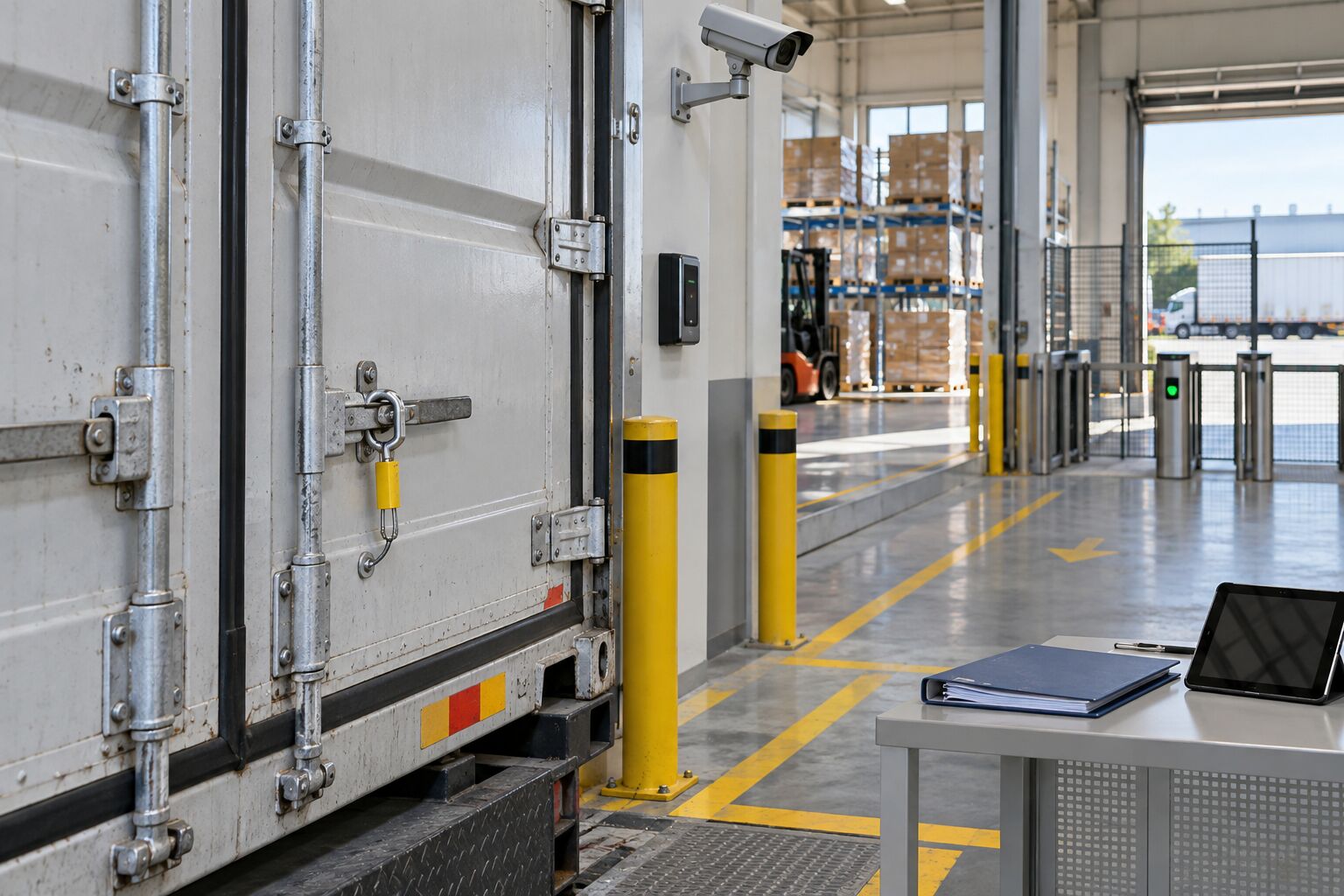
Under Article 2 of the Regulations, statutory supply chain operators include the following 10 categories; General AEO is open only to tax obligors and goods exporters (Article 6), while all other categories may only apply for Security-certified AEO and must meet the category-specific conditions in Articles 17 to 23:
- Tax obligor
- Goods exporter
- Manufacturing
- Customs brokerage
- Freight forwarding
- Shipping agency
- Warehousing
- Road transport
- Ocean transport
- Air transport
Exam question: Which of the following is NOT an AEO supply chain operator?
Among the options "Customs, manufacturing, freight forwarding, road transport," the answer is Customs. Manufacturing, freight forwarding, and road transport are all explicitly listed in Article 2; Customs is the certifying authority, not an operator being certified.
What Customs Facilitation Comes With AEO Certification?
The facilitation measures for the two categories are set out in different articles, with different scopes:
| Category | Statutory facilitation measures |
|---|---|
| General AEO | Customs may grant: a lower inspection rate — import shipments selected for inspection may use simplified inspection, and export shipments selected for inspection may be exempted from inspection (this does not apply to operators with a major violation record in the past 3 years); for import goods released after providing a tax/duty guarantee, taxes and duties may be paid on a monthly consolidated basis, among other measures (Article 9) |
| Security-certified AEO | For goods exporters' export goods (Article 15) and tax obligors' import goods (Article 16), Customs may grant: the lowest document review and inspection rate; export shipments selected for inspection may be exempted from inspection or given priority inspection, and import shipments selected for inspection may use simplified inspection and priority inspection; a single window for unreleased cases; the option to apply for non-intrusive inspection; and where the FOB value of an export declaration or the dutiable value of an import declaration is NT$100,000,000 or more, clearance without document review or inspection, among other measures |
Neither the statutory provisions checked for this page nor the Customs Administration's AEO website state that AEO "increases the chance of C1 (clearance without review or inspection)" or give any C1 percentage. The explicit clearance-without-review-or-inspection provision applies only to Security-certified AEO, and only where the FOB value of an export declaration or the dutiable value of an import declaration is NT$100,000,000 or more, in which case Customs "may" grant clearance without document review or inspection (Articles 15, 16).
How Do You Apply for AEO? How Much Does It Cost?
The review for Security-certified AEO includes a written eligibility review, a self-assessment form review, and an on-site verification, with the final decision made by a review committee meeting.
Fees
According to the Customs Administration's FAQ, when applying for Security-certified AEO, Customs only charges NT$2,000 for issuing the certificate to those who pass certification, and collects no other fees; however, operators may incur other investment costs if they upgrade software or hardware to meet the standards.
What Do Operators Find Hardest?
A 2020 master's thesis surveyed 85 southern Taiwan manufacturers that had already passed Security-certified AEO, finding that the review items rated hardest were information technology security, incident prevention and handling, assessment and improvement, and business partner security. This reflects self-rated difficulty, not a failure rate.
Which Countries Has Taiwan Signed AEO Mutual Recognition Arrangements With?
As of the 2026-09-27 review, the Customs Administration lists a total of 10 countries with AEO mutual recognition arrangements (MRA):
| Country | Signing date |
|---|---|
| United States | 2012-11 |
| Singapore | 2013-07 |
| Israel | 2013-12 |
| South Korea | 2015-12 |
| Australia | 2018-09 |
| Japan | 2018-11 |
| India | 2018-12 |
| New Zealand | 2020-12 |
| Guatemala | 2021-05 |
| Canada | 2024-12 |
The Customs Administration's FAQ states that reciprocal clearance benefits apply only to Security-certified AEO. Taiwan separately runs a "Cross-Strait Customs AEO Mutual Recognition Pilot" with mainland China, which is a pilot program and not a complete mutual recognition arrangement.
What Is the WCO SAFE Framework? How Does It Relate to C-TPAT?
The World Customs Organization (WCO) adopted the SAFE Framework in the 6th month of 2005 and introduced AEO in 2007; the latest edition is from the 6th month of 2025. The three pillars of SAFE are:
- Customs-to-Customs network arrangements
- Customs-to-Business partnerships
- Cooperation between Customs and other government agencies
Exam question: Which of the following statements about WCO SAFE is FALSE?
Among the options "strengthens global trade security / Customs-to-Business network arrangements / consistent risk management / AEO is broadly similar to the U.S. C-TPAT," the answer is "Customs-to-Business network arrangements". "Network arrangements" belong to Customs-to-Customs, while Customs-to-Business is a "partnership."
AEO and C-TPAT
C-TPAT is the U.S. CBP's supply chain security partnership program. The Taiwan-U.S. MRA was signed by AIT and TECRO on 2012-11-26 and is implemented by C-TPAT and Taiwan's AEO; CBP explains that the MRA means both sides' security standards and verification procedures are the same or compatible.
Core elements: the 2025 edition lists five, while the Customs Administration's Chinese explanation lists four
The 2025 edition of SAFE lists five core elements: harmonizing advance electronic cargo information; consistent risk management; performing outbound inspection of high-risk cargo at the reasonable request of the importing country; providing facilitation to operators that meet minimum supply chain security standards; and close cooperation with other government agencies. The Chinese glossary on the Customs Administration's AEO website still describes "four core elements."
What Does Research Say About the Effects of AEO?
Research findings are mixed and cannot be directly used to infer the clearance time of any specific operator:
| Study | Finding | Limitation |
|---|---|---|
| APEC (2020) | After the Taiwan-Japan MRA took effect, Taiwan's average first-stage release time for imports from Japan fell by about 32% for sea freight and about 29% for air freight | Before-and-after average comparison without controlling for other factors; release times for some stages under other MRAs (e.g., the second stage for Taiwan-Japan air freight and the second stage for Taiwan-Australia sea freight) actually increased |
| Zheng et al. (2024) | Firms that obtained AEO certification have a lower probability of export disruption | The study subjects are Chinese firms |
| World Bank (2015) | Countries with an AEO system have better trade performance, but MRAs do not necessarily lead to improvement | A working paper that has not been peer-reviewed |
What Are the Steps to Apply for Security-certified AEO?
1Confirm your category and eligibility
Confirm that you are a statutory supply chain operator under Article 2, and that you meet the basic conditions in Article 10 on credit standing, violation record, and security review items, as well as the category-specific conditions in Articles 14 and 17–23.
2Assign dedicated officers
Assign at least 2 trained supply chain security officers.
3Establish a security management system
Conduct a self-review and make improvements against the security review items and verification benchmarks announced by the Customs Administration (14 categories, 225 items); the Customs Administration's FAQ states that 100% compliance is not required at the time of application, and further improvement is allowed during the review.
4Submit the application and undergo written review
Submit an application to Customs and undergo a written eligibility review and a self-assessment form review.
5On-site verification and decision
After Customs conducts an on-site verification, the review committee meeting makes the decision, generally completed within 3 months, extendable once by up to 3 months if necessary.
6Obtain the certificate and maintain compliance
Successful applicants pay an NT$2,000 certificate fee; conduct at least one self-inspection per year, and apply for recalibration every 3 years.
What Are Common AEO Terms?
- AEO
- Authorized Economic Operator; a supply chain operator certified by Customs (Article 2 of the Regulations).
- General AEO
- Open only to tax obligors or goods exporters, with facilitation such as a lower inspection rate.
- Security-certified AEO
- Open to statutory supply chain operators, who must pass a security review; their import/export goods may enjoy facilitation such as the lowest inspection rate, and goods exported to MRA countries may also enjoy reciprocal clearance benefits.
- MRA
- Mutual recognition arrangement; each side's Customs recognizes the other's AEO certification results.
- C-TPAT
- The supply chain security partnership program of U.S. Customs and Border Protection (CBP).
- WCO SAFE
- The World Customs Organization's framework of standards for global trade security and facilitation.
What Are the Sources and Scope of Verification?
The following sources were accessed on 2026-09-27; document dates and access dates are shown separately, and sources without a stated update date are not given a fabricated one.
Government and Official Primary Sources
- Regulations Governing the Certification and Management of Authorized Economic Operators | Document date: amended 2025-05-21; issued under Article 19, Paragraph 3 of the Customs Act; Article 2 (categories and supply chain operators), Article 6 (General AEO eligibility), Article 8 (General AEO review timeline and recalibration), Article 9 (General AEO facilitation), Article 10 (Security-certified AEO eligibility), Article 12 (Security-certified AEO review timeline and recalibration), Articles 15 and 16 (Security-certified AEO facilitation), Article 29 (annual self-inspection).
- Customs Administration AEO Website: FAQ | Document date: not indicated; review timelines, the NT$2,000 Security-certified AEO certificate fee, and that MRA benefits apply only to Security-certified AEO.
- Customs Administration AEO Website: Qualified AEO Operator Lookup | Document date: not indicated; operators can be looked up by tax ID number or company name.
- Customs Administration AEO Website: Security-certified AEO Review Process | Document date: not indicated; written eligibility review, self-assessment form review, on-site verification, and review committee meeting.
- Customs Administration AEO Website: Glossary (WCO SAFE) | Document date: not indicated; SAFE operates through Customs-to-Customs network arrangements and Customs-to-Business partnerships.
- Customs Administration: News on the Taiwan-Canada AEO Mutual Recognition Arrangement Signing | Document date: 2024-12-05; as of 2024-11-30, 952 operators were certified (421 Security-certified, 531 General), with Canada as the 10th MRA country.
- U.S. CBP: CBP and Taiwan AEO agree on cargo security program standards | Document date: 2012-11-27; the Taiwan-U.S. MRA was signed on 2012-11-26 and is implemented by C-TPAT and Taiwan's AEO.
- U.S. CBP: C-TPAT Mutual Recognition FAQs | Document date: 2025-07; an MRA means both sides' security standards and verification procedures are the same or compatible.
- WCO SAFE Framework of Standards 2025 | Document date: 2025-06; adopted in the 6th month of 2005, with three pillars and five core elements.
- WCO: SAFE Package | Document date: not indicated; the AEO program was introduced in 2007, and the core elements are unchanged in the 2025 edition.
- Customs Administration: Taiwan-Japan AEO Mutual Recognition Arrangement Goes Live | Document date: 2019-07-10; Taiwan-Japan mutual recognition went live on 2019-05-22.
- Ministry of Foreign Affairs – Association of East Asian Relations: Taiwan-Japan AEO Mutual Recognition Arrangement | Document date: not indicated; the page title states it was signed in the 107th year of the Republic of China calendar (ROC), 11th month, 30th day.
- Customs Administration AEO Website: News on the Taiwan-Australia AEO Mutual Recognition Arrangement Signing | Document date: 2018-09-19; Taiwan completed signings with the United States, Singapore, Israel, and South Korea on 2012-11, 2013-07, 2013-12, and 2015-12 respectively, and signed with Australia on 2018-09-18.
- Ministry of Foreign Affairs: Taiwan-India AEO Mutual Recognition Arrangement Signing | Document date: not indicated; signed in Taipei on 2018-12-18.
- Ministry of Finance: Taiwan-Guatemala AEO Mutual Recognition Arrangement Signed via Videoconference | Document date: 2021-05-28; signed via videoconference on 2021-05-28.
- Customs Administration, Taipei Customs: AEO Mutual Recognition Arrangement Countries | Document date: 2026-01-23; lists 10 MRA countries.
- Customs Administration: Taiwan-New Zealand AEO Mutual Recognition Arrangement Signing | Document date: 2020-12-23; signed remotely at separate locations on 2020-12-18.
Research Literature and International Official Studies
APEC Customs Time Release Comparison Study – Case Study of AEO MRAs
After the Taiwan-Japan MRA took effect, Taiwan's average first-stage release time for imports from Japan fell by about 32% for sea freight and about 29% for air freight; however, this is a before-and-after average comparison that does not control for other factors, and release times for some stages under other MRAs actually increased, so it cannot be used to infer the clearance time of any specific operator.
Authorized economic operator certification and export stability: Evidence from China's firms
Using data from Chinese firms, the study found that firms with AEO certification have a lower probability of export disruption; the study subject is China's system, and the findings cannot be directly applied to Taiwan.
The Impacts of Trade Facilitation Measures on International Trade Flows
Cross-country data show that countries with an AEO system have better trade performance, but mutual recognition arrangements do not necessarily lead to improvement; this is a working paper that has not been peer-reviewed.
A Study on the Perceived Difficulty of AEO Certification: The Case of Southern Taiwan Firms
A survey of 85 southern Taiwan manufacturers that had already passed Security-certified AEO found the hardest review items were information technology security, incident prevention and handling, assessment and improvement, and business partner security; this reflects self-rated difficulty, not a failure rate.
At the time of review, this page did not find an official total certification count after 2024-11-30; the "1000 results" shown on the lookup page appears to be a query display limit and should not be treated as an operator count. The exact date of the South Korea MRA comes only from secondary sources, so this page states only the year and month; the start date of the cross-strait pilot also comes only from secondary sources, so this page does not state a date. This page does not infer any effect of AEO on the clearance time of ordinary e-commerce parcels.
AEO FAQ
What is AEO?
How much does AEO certification cost?
Where can I look up qualified AEO operators?
Which of the following is NOT an AEO supply chain operator: Customs, manufacturing, freight forwarding, road transport?
Which of the following statements about WCO SAFE is FALSE?
A consolidated shipping operator says it has AEO — how do I verify that?
Related Reading
Shipping Goods From China to Taiwan? Confirm Your Declaration Details First
HowBridge only has warehouses in Shenzhen and Taoyuan, offering China-to-Taiwan consolidated shipping; before shipping, prepare your item description, quantity, and EZ WAY authorization.
View China-to-Taiwan Shipping Service