If someone in my shared consolidation bag ships a banned item, will my parcel be seized too?
If someone in my bag ships a banned item, will my parcel be confiscated?
The rules contain no provision that penalizes you or confiscates your goods because someone else in the same bag broke the rules: express imports are declared per house bill, each with its own taxpayer, and Customs sampling is also done per house bill. But in air “bagging”, if even one item is listed C3 for inspection, the whole bag goes for inspection, and after inspection the other items “may” be released separately, so you may wait longer. Sea express may not be bagged by law.
For Taiwan buyers whose parcel is stuck at Customs, who heard that “someone in the same bag shipped a banned item and the whole batch was seized”, and who worry about their own parcel. HowBridge only provides mainland China → Taiwan consolidation, operating from the Shenzhen consolidation warehouse and the Dayuan, Taoyuan operations warehouse. Customs clearance is handled by partner customs brokers; HowBridge is not a customs broker. If your parcel has already been flagged by Customs for missing documents or detained, go straight to What to do when Customs detains your parcel.
Legally, can someone else’s banned item get me in trouble?
The rules contain no such provision. Declaration, taxation and sampling for express imports are all done per house bill; the penalty provisions target the person who imports in violation or the operator who bags in violation, and none penalizes the other recipients in the same bag. Someone on an online shopping forum relayed that “someone in the same consolidation bag shipped a live animal and the whole batch was seized” (the original was not obtained for this page); legally, “penalty” and “delay” must be looked at as two separate matters.
| Question | What the rules say | Source |
|---|---|---|
| Who is the taxpayer | For sea express combined declaration, Customs lists each recipient who declared separately as the taxpayer on the simplified declaration and tax bill; when an air express operator declares as the holder of the goods, Customs may list the declared consignee as the taxpayer | Regulations Governing the Clearance of Sea Express Cargo, Article 14, paragraph 4; Regulations Governing the Clearance of Air Express Cargo, Article 18, paragraph 4 |
| Unit of Customs inspection | Simplified declarations combined under one declaration number are inspected by “sub-number” (each house bill) | Rules for Simplified Declaration Clearance of Air Express Cargo, Point 6 |
| Who is penalized for illegal bagging | Bagging without approval is penalized against the express operator: a warning or NT$6,000–30,000, which may be imposed each time | Regulations Governing the Clearance of Air Express Cargo, Article 26, paragraph 3; Regulations Governing the Clearance of Sea Express Cargo, Article 29 |
| Who is penalized for importing live protected species | The person who imported without approval: imprisonment of 6 months to 5 years, and a fine of NT$300,000–1,500,000 may also be imposed | Wildlife Conservation Act, Article 40, subparagraph 1 |
| After you delegate the declaration | In its guidance on wood products and seeds, APHIA said that once the buyer completes the delegation of declaration, the buyer bears responsibility for illegal import (as relayed by the media) | Central News Agency 2026-08-04, relaying APHIA |
The rules contain no penalty for other recipients in the same bag, but the goods may physically be sent for inspection together, and delay is a separate matter. Whether Customs lets the other items go first after inspection is worded with “may” in the provision: it is something Customs can do, not a guarantee.
What is bagging? Are the rules the same for air and sea express?
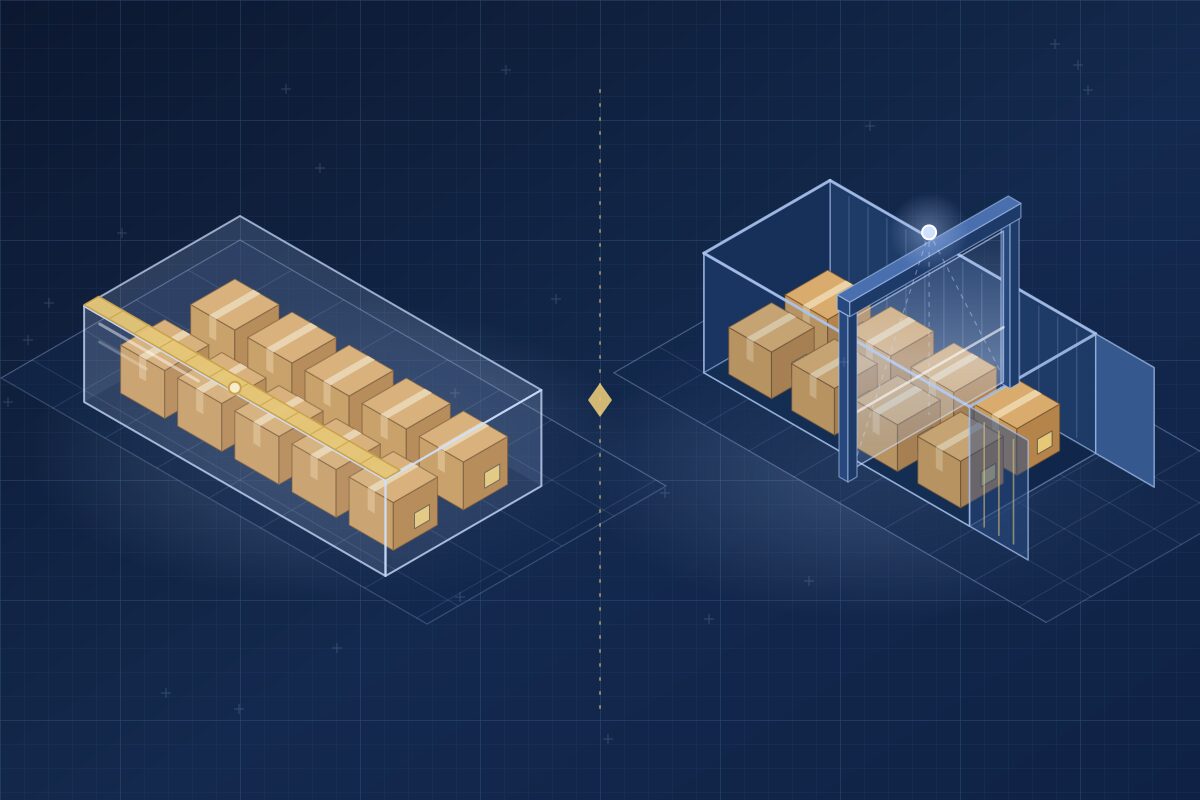
Bagging means putting goods from several house bills into one outer bag for clearance. Air e-commerce cargo may be bagged in small quantities with Customs approval; sea express may not be bagged at all, except documents. Customs restricts bagging because stacked goods make X-ray images overlap and hard to read, and make it easier to hide undeclared controlled items.
| Item | Air express | Sea express |
|---|---|---|
| Bagging of general cargo | From 1 April 2022 (ROC year 111), combined declarations may in principle not be bagged | Not allowed, except documents |
| E-commerce exception | With a number assigned by Customs, small-quantity bagging is allowed; for consolidators not designated by a platform, each bag holds ≤10 house bills, 1 piece per house bill, ≤20 kg per bag, and the outer bag must be transparent | No exception |
| X-ray | The Customs Administration states that sea and air express cargo and postal parcels are all X-rayed 100% | The Regulations require all imported and exported sea express cargo to pass X-ray (except cargo that is unsuitable for irradiation and approved as such) |
| One item flagged C3 | The whole bag goes to the inspection area to wait for inspection; after inspection the remaining bagged goods may be released separately by sub-number | The zone operator sends that item for inspection |
| Illegal bagging | Express operator: warning or NT$6,000–30,000 | Sea express operator: warning or NT$6,000–30,000 |
What the rules expressly send for inspection as “the whole bag” is air bagging (and documents under sea express); sea express cargo is cleared item by item, and goods in the same container are declared separately.
HowBridge data: when one parcel on a master bill is held, how long do the others wait?
In HowBridge sea express records, when a parcel on a master bill was held by Customs, all 50 other house bills under the same master number were released within 2 seconds of being created; they were not dragged along. The figures below come from event times returned to HowBridge by the Customs-Port-Trade Single Window GC329, measuring from “order received and created online” to “released by Customs”; here “held” means released more than 1 hour after creation or not yet released.
| Method | Sample | Batches with a held parcel | Other house bills in the same batch | Result |
|---|---|---|---|---|
| Same master bill number | Created 2026-04-29 to 11-12; 78 master bills, 281 house bills | 16 master bills (21 house bills in total took over 1 hour to be released or are still unreleased) | 50 house bills | All 50 released within 2 seconds |
| Same creation day (approximately the same batch) | Created 2026-05-07 to 11-13; 1,861 house bills | 50 days with a held parcel | 827 house bills | All 827 released within 2 seconds |
- The 4 master bills that were slow as a whole each had only 1 house bill, so these were not whole batches being held.
- Normal release speed: of 961 sea express house bills from 2026-08-06 to 10-24, 97.1% were released within 2 seconds of creation and 98.4% within 24 working hours (another 17 were not yet released at the time of counting and are not in the denominator).
- Share held: of the 1,861 house bills in the same-creation-day approximation, 67 (3.6%) took over 1 hour to be released or are still unreleased.
The data records no reason for a hold, so it cannot show whether a prohibited item was involved; it measures only creation to release, not the wait before arrival at port, X-ray and container unloading; the master bill number is filled in for only some house bills, and “created on the same day” is not necessarily the same container. The results represent HowBridge sea express only, not other operators.
Why are some consolidators’ shipments checked more often?
Customs uses risk analysis to choose what to inspect, and the consolidator itself is a risk factor. From 15 November 2025 (ROC year 114), the Customs Administration has required simplified declarations to state the e-commerce platform or overseas private consolidator, and increased the number of opened inspections for goods handled by poor-quality consolidators; from 24 October 2025 (114-10-24), goods imported from high-risk regions such as mainland China also face a higher rate of manual opening inspection.
| Time | What Customs did | Source |
|---|---|---|
| From 114-10-24 | Higher rate of manual opening inspection for goods and postal parcels imported from mainland China, Hong Kong and Macao, Vietnam and Thailand | Customs Administration, 2025-10-29 |
| From 114-11-15 | Simplified declarations must state the e-commerce platform or overseas private consolidator; strong crackdown on goods of selected poor-quality consolidators | Customs Administration, 2026-01-08 |
| Up to 115-09-15 | 18 operators suspended or had their licenses revoked, fines of NT$10,080,000, back taxes over NT$300,000,000, and 848 live animals seized | Customs Administration, 2026-09-15 |
- What it means for you: if the consolidator you use is rated high-risk, more of the goods it handles will be opened for inspection, and even if your parcel is legal, you may wait longer because it was picked.
- The same approach is used internationally: the World Customs Organization’s 2025 Illicit Trade Report states that 65% of wildlife and timber cases were seized because Customs targeted them in advance through risk analysis, not through routine opening of every item.
Why are live animals especially serious? Who is penalized?
By law, live animals are not express cargo and cannot clear in the express zone; importing live protected species without approval is a criminal offense, and the penalty falls on the person who imports. After a seizure, Customs refers the case to APHIA for handling.
| Law | Rule | Penalty |
|---|---|---|
| Regulations Governing the Clearance of Air / Sea Express Cargo | Live animals and plants and protected wildlife are not express cargo and may not clear in the express zone | — |
| Wildlife Conservation Act, Article 24 | Live wild animals (protected or general) may not be imported without approval of the central competent authority | Protected species (Article 40, subparagraph 1): imprisonment of 6 months to 5 years, and a fine of NT$300,000–1,500,000 may also be imposed; general species (Article 51, subparagraph 3): an administrative fine of NT$10,000–50,000 |
| Statute for Prevention and Control of Infectious Animal Diseases, Article 34 | Goods subject to quarantine must be submitted for quarantine on import and may not be imported by post | Importing quarantine goods that are banned from import without permission (Article 41): imprisonment of up to 7 years, and a criminal fine of up to NT$3,000,000 may also be imposed; failing to apply for quarantine (Article 43, subparagraph 11): NT$50,000–1,000,000 |
| Customs Anti-Smuggling Act, Article 36 | Smuggling goods into the country | A fine of up to 3 times the value of the goods, and the goods are confiscated |
- The “whole batch” rule for quarantine: Article 32-1 of the Statute for Prevention and Control of Infectious Animal Diseases provides that when part of a quarantine batch fails, the whole batch in principle fails, and goods assessed as having no risk of cross-contamination may be judged individually. Whether this article applies to goods of different recipients in the same consolidation bag, no explicit rule was found.
- International organization report: WWF and TRAFFIC counted that at least 28% of wildlife seizures reported in the EU in 2014–2017 were linked to post and express, and parcels also contained live animals.
- Import rule B01: means import must follow the quarantine rules of the APHIA. In the HowBridge database, 97 of the 122 tariff numbers in Chapter 01 (live animals) are marked B01.
HowBridge sea express and air freight both clear through express clearance, and by law live animals cannot go through the express zone; goods with import rule B01 are also a category the Shenzhen warehouse refuses.
My parcel is stuck: how do I check whether it was held with others?
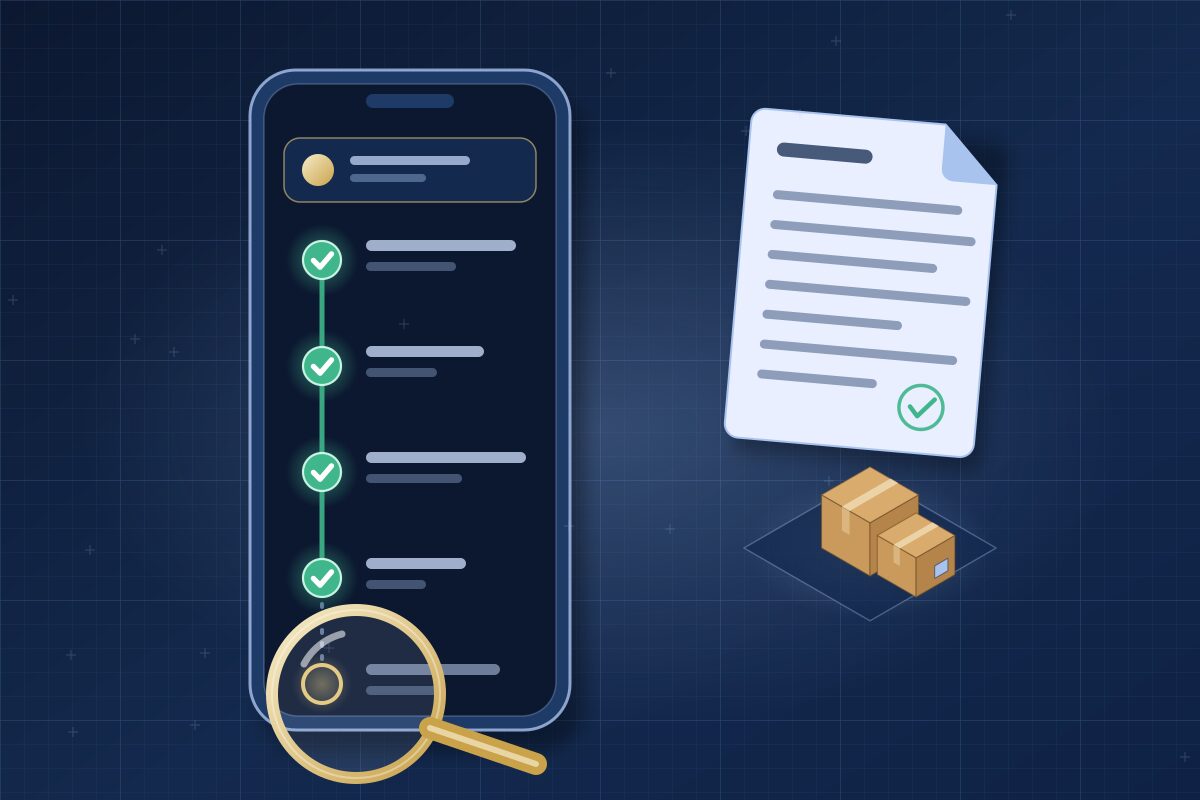
Ask the consolidator for your “house bill number” and check clearance status on the Customs-Port-Trade Single Window GC329. With only a courier tracking number or a Taobao order number, you cannot look up Customs clearance.
1Get the house bill number
Ask the consolidator for the house bill number (HAWB) of your parcel.
2Check on GC329
Open GC329 Full-process Tracking of Imported Simplified Cargo, choose sea or air, and enter the house bill number.
3Read the status
No data = not yet declared or the number is wrong, so ask the seller or the logistics operator; stuck at 連線收單建檔 (order received and created online) = unloading and warehouse entry are coordinated by the operators, so ask the customs broker or express operator; only a status related to inspection means it was selected for inspection.
4Check EZ WAY
From 2026-03-01, for individual simplified declarations delegated online through EZ WAY, the customs broker first sends you a push notification to confirm the delegation before declaring. When you receive it, check the item name and amount; if you do not reply, or reply that the declaration does not match, that shipment cannot be declared for import. If you have not received a push yet, the broker has not yet sent it or has not yet declared.
For how to supplement documents, pay extra tax, return or abandon goods, and the legal deadlines, see What to do when Customs detains your parcel; to understand each status code, see Consolidation tracking and status explained.
How do I choose a consolidator to lower the chance of being dragged in by others?
Pick a consolidator that “declares every item in your own name, gives you a house bill number you can check yourself, and has a clear refusal list”. You can verify all of these yourself, without relying only on what the operator says.
| What to check | How to verify | Why it matters |
|---|---|---|
| Declares each item in your name | EZ WAY sends a pre-confirmation of delegation push; the item name and amount must match what you bought | Under combined declaration Customs treats each consignee as the taxpayer; goods with mismatched declarations cannot be cleared |
| Can give a house bill number | Use the number to find your item on GC329 | Only if you can look it up yourself can you tell whether it is stuck at Customs or with the operator |
| Whether air freight is bagged | Ask whether air freight is bagged and whether there is a bagging number assigned by Customs | When bagged and one item is inspected, the whole bag goes to inspection |
| A clear refusal list | The website states clearly what is not accepted | The Customs Administration uses risk analysis to select goods handled by poor-quality consolidators and raises the number of opened inspections |
| Does not claim to ship anything | Check whether advertising says things like “we can declare controlled goods for you” | The Customs Administration warns that such operators actually misreport goods names or conceal goods, and the importer may be penalized |
If the item name or amount in the EZ WAY push differs from what you bought, reply “declaration does not match”; do not press “matches” just to get your parcel sooner.
How does HowBridge handle same-batch risk?
HowBridge sea express declares item by item in the recipient’s name and, by law, does not bag; the Shenzhen warehouse judges by the declared item name and does not accept 8 categories of goods. Clearance is handled by partner customs brokers; HowBridge is not a customs broker.
- Item-by-item declaration: each batch of each recipient has its own house bill number that you can check yourself on GC329.
- Refused at the Shenzhen warehouse: goods with import rule B01, food with MP1 / MW0, import rule 375, goods banned from import into Taiwan, Chinese dual-use items under export control, flammables, batteries without UN38.3, and beauty devices that may count as medical devices.
- No opening inspection service: the Shenzhen warehouse does not open every item to confirm its contents and relies on the item name you declare; work orders currently cover four services: photos, counting, unboxing and return.
- Declare truthfully: write the item name, quantity and amount as you bought them; misreporting the goods may be punished by a fine of up to 5 times the evaded duty or confiscation of the goods (Customs Anti-Smuggling Act, Article 37).
For the legal basis and examples for each category, see Taiwan import ban list.
What does international research say about parcel smuggling and Customs inspection?
Research and reports from international organizations all say that small e-commerce parcels make item-by-item inspection very hard for Customs, so countries use risk analysis to choose what to inspect and invest in X-ray and image interpretation. HowBridge found no peer-reviewed paper specifically on “collective liability in a shared consolidation bag”; the following is background only.
| Study or report | Finding | Limit |
|---|---|---|
| World Customs Organization (2026) | E-commerce accounted for 44.8% of the cases in the organization’s 2025 Illicit Trade Report; 65% of wildlife and timber cases were seized through risk-analysis targeting | Press release summary |
| WWF and TRAFFIC (2021) | At least 28% of EU wildlife seizures were linked to post and express, and parcels also contained live animals | EU data, not Taiwan |
| Blegen (2020) | Limited declaration data on small e-commerce parcels may make it very hard for Customs to manage risk effectively | Review of international systems |
| Chermiti (2019) | Data mining on past declarations can build risk profiles to use as a basis for selecting inspections | Methods study |
| WCO News (2019) | The share of small parcels among counterfeit seizures rose from 63% to 69% | WCO citing the OECD, not the original report |
What terms will I meet in customs clearance?
- House bill (HAWB)
- The number an express operator issues for each recipient’s goods; GC329 uses it to look up clearance status.
- Master bill (MAWB / master number)
- The master number for a whole batch of goods (same flight or same voyage), with many house bills under it.
- Bagging
- Putting goods from several house bills into one outer bag for clearance. Air e-commerce may be bagged in small quantities with approval; sea express may not be bagged, except documents.
- Combined declaration
- Goods of different recipients under the same master number and of the same category share one simplified declaration number, while each still has its own sub-number and taxpayer.
- C1 / C2 / C3
- Clearance channels: C1 no document review or inspection, C2 document review, C3 cargo inspection.
- Held (detained)
- Goods found after inspection to involve a violation, tax evasion or something needing verification, which Customs holds back instead of releasing.
- B01
- An import rule code for goods; on import, the quarantine rules of the APHIA must be followed.
- Pre-confirmation of delegation
- From 2026-03-01, for individual simplified-declaration express shipments using real-name-verified online delegation (EZ WAY), the delegation must be confirmed before declaration; paper delegation can also be used instead.
What are the sources and the scope of verification?
The sources below were consulted on 2026-11-17; document dates are marked separately from the consultation date, and no date is made up where none is stated. HowBridge figures come from a read-only query of its own clearance records on 2026-11-17.
Government and official sources
- National Laws and Regulations Database: Regulations Governing the Clearance of Air Express Cargo | Document date: 2026-02-23; Article 6: live animals and plants and protected wildlife are not express cargo and may not clear in the express zone; Article 12-1: goods of different recipients under the same master number may be declared together, but except documents they may in principle not be bagged; Article 18: Customs may list the declared consignee as the taxpayer; Article 26, paragraph 3: an express operator that bags or unbags without approval receives a warning or a fine of NT$6,000–30,000.
- National Laws and Regulations Database: Regulations Governing the Clearance of Sea Express Cargo | Document date: 2026-02-23; Article 3: live animals and plants may not clear in the zone, and all inbound and outbound sea express cargo must pass X-ray inspection; Article 14, paragraph 5: goods under combined declaration may not be bagged except documents; Article 29: violators, meaning the sea express operator, receive a warning or NT$6,000–30,000.
- Customs Administration, Ministry of Finance: Rules for Simplified Declaration Clearance of Air Express Cargo | Document date: 2022-03-31; Point 6: a simplified declaration under combined declaration is inspected by “sub-number”; when part of a bagged shipment is assigned C3, the whole bag goes to the inspection area to wait for inspection. Point 8: after inspection, except for sub-numbers that must be held, the remaining bagged goods may be released separately by sub-number.
- Customs Administration, Ministry of Finance: Rules for Clearance of Sea Express Cargo | Document date: 2021-12-20; when X2 or X3 cargo is assigned C3, the zone operator sends that cargo to the inspection area to wait for inspection; after inspection, goods involving a violation, tax evasion or needing verification are held. Only documents of types X1 and X6 may be bagged.
- Customs Administration, Ministry of Finance, notice: conditional small-quantity bagging of air e-commerce cargo (Tai-Guan-Ye-Zi No. 1111008083) | Document date: 2022-03-30; from 1 April 2022 (ROC year 111), air e-commerce cargo with a number assigned by Customs may be bagged in small quantities: for consolidators not designated by a platform, no more than 10 house bills per bag, 1 piece per entry, total gross weight no more than 20 kg per bag, and the outer bag must be transparent except for cartons.
- Customs Administration, Ministry of Finance: express cargo from high-risk epidemic areas may not be bagged for import | Document date: 2021-09-14; bagging makes it easier to hide undeclared controlled items, and goods stacked on one another make X-ray images overlap and cluttered, which hinders interpretation.
- Customs Administration, Ministry of Finance: Customs’ response to reports on Chinese consolidation and Chinese e-commerce | Document date: 2025-10-27; sea express cargo and postal parcels are cleared item by item; from 1 April 2022 (ROC year 111) bagging of general air express cargo was abolished entirely; e-commerce cargo is managed by tier according to official versus private consolidation; whether sea or air express cargo or postal parcels, Customs X-rays 100%.
- Customs Administration, Ministry of Finance: stepping up sampling of goods from high-risk regions | Document date: 2025-10-29; from 24 October 2025 (114-10-24), goods and postal parcels imported from high-risk regions such as mainland China, Hong Kong and Macao, Vietnam and Thailand face a higher rate of manual opening inspection.
- Customs Administration, Ministry of Finance: strong crackdown on poor-quality overseas consolidators | Document date: 2026-01-08; from 15 November 2025 (114-11-15), simplified declarations must state the e-commerce platform or overseas private consolidator, and Customs uses risk analysis to select goods handled by poor-quality consolidators for a higher number of opening inspections.
- Customs Administration, Ministry of Finance: Customs strongly cracks down on unlawful operations and severely punishes violating operators | Document date: 2026-09-15; the crackdown so far has led to 18 operators being suspended or having their licenses revoked, fines of NT$10,080,000, back taxes of over NT$300,000,000, and 848 live animals seized.
- Customs Administration, Ministry of Finance: do not trust false advertising by unlawful overseas consolidators | Document date: 2025-03-24; unlawful consolidators clear goods by misreporting goods names or concealing goods inside parcels, and importers who trust them may face heavy fines or even criminal liability.
- Customs Administration, Ministry of Finance: never import live animals illegally | Document date: 2025-01-08; importing live animals without permission may violate the Wildlife Conservation Act, the Statute for Prevention and Control of Infectious Animal Diseases, the Foreign Trade Act and the Customs Anti-Smuggling Act at once, with up to 7 years’ imprisonment; after a seizure Customs notifies APHIA for handling.
- National Laws and Regulations Database: Wildlife Conservation Act | Document date: 2025-02-18; Article 24, paragraph 1: live wild animals may not be imported without approval of the central competent authority; Article 40, subparagraph 1: importing live protected species without approval is punished by imprisonment of 6 months to 5 years, and a fine of NT$300,000–1,500,000 may also be imposed; Article 51, subparagraph 3: general species of live animals, an administrative fine of NT$10,000–50,000; Article 52: illegal wildlife may be confiscated.
- National Laws and Regulations Database: Statute for Prevention and Control of Infectious Animal Diseases | Document date: 2019-12-13; Article 34: goods subject to quarantine must be submitted for quarantine on import and may not be imported by post; Article 41: importing prohibited goods subject to quarantine without permission is punished by imprisonment of up to 7 years, and a fine of up to NT$3,000,000 may also be imposed; Article 43, subparagraph 11: failing to apply for quarantine, a fine of NT$50,000–1,000,000; Article 32-1: when part of a batch fails, the whole batch in principle fails, and where there is assessed to be no risk of cross-contamination it may be judged individually.
- Executive Yuan Gazette: description of goods import rule codes (B01) | Document date: 2026-09-24; B01: on import, follow the “List of Animal and Plant Items Subject to Quarantine” of the Animal and Plant Health Inspection Agency, Ministry of Agriculture, and the relevant quarantine rules (this file was taken from a mirror of the gazette).
- Customs-Port-Trade Single Window: GC329 Full-process Tracking of Imported Simplified Cargo | Document date: not stated; choose sea or air; the house bill number is required and the master bill number is optional.
- Customs Administration, Ministry of Finance: FAQ on real-name verification for express consignees | Document date: 2020-07-08; Q5: when goods have not yet been declared, contact the seller or the logistics operator; Q6: a courier tracking number or order number alone cannot be used to check clearance; Q7: no data on GC329 means not yet declared or the number is wrong; Q10: EZ WAY has data only after the customs broker has declared; Q12: unloading and warehouse entry are coordinated between operators, and Customs does not intervene.
- Customs Administration, Ministry of Finance: pre-confirmation of delegation of customs declaration | Document date: 2021-12-28; if there is no reply, or the reply is that the declaration does not match, the shipment cannot be declared for import because the delegation was not completed.
- Customs Administration, Ministry of Finance: Customs fully implements pre-confirmation of delegation from 1 March | Document date: 2026-02-24; from 1 March 2026 (ROC year 115, 115-03-01), pre-confirmation of delegation is fully implemented for individual simplified-declaration express shipments that use real-name-verified online delegation.
- National Laws and Regulations Database: Customs Anti-Smuggling Act | Document date: 2018-05-09; Article 36: smuggling goods into the country is punished by a fine of up to 3 times the value of the goods, and the goods are confiscated; Article 37: misreporting the name, quantity or value of the goods carried is punished by a fine of up to 5 times the evaded import duty, or confiscation of the goods.
- Central News Agency: APHIA reminds that unprocessed wood products and seeds are quarantine goods | Document date: 2026-08-04; APHIA said that once the importer (the buyer) completes the delegation for customs declaration, the importer bears responsibility for illegal imports (as reported by the media).
Research literature
E-commerce becoming a primary conduit for global illicit trade: WCO's flagship Illicit Trade Report finds (Illicit Trade Report 2025 新聞稿,2026-07-08)
World Customs Organization 2025 Illicit Trade Report: covers 163,850 cases reported by 170 customs administrations; e-commerce accounted for 44.8% of the cases in the report; 65% of wildlife and timber cases were seized because Customs targeted them in advance through risk analysis.
The control of parcels in the EU: an effective means to detect and tackle wildlife trafficking? (Public Summary Report)
WWF and TRAFFIC report on parcel control in the EU: at least 28% of wildlife seizures reported in the EU in 2014–2017 were linked to post and express, and parcels also contained live animals; Customs control parcels through risk targeting, semi-random and random checks.
Preventing and detecting wildlife trafficking on maritime, aerial and postal/courier transport chains: An analysis of innovative solutions with the potential to support law enforcement and compliance efforts
WWF France 2023 report on transport chains: wildlife is hidden in post and express parcels, detection remains hard given the huge volumes, and X-ray, CT and AI image interpretation are the main areas of development.
Re-examining Border Clearance in the Age of E-Commerce
World Customs Journal 2020: small parcels sent by e-commerce directly to consumers have surged; limited declaration data may make it very hard for Customs to manage risk effectively.
Establishing Risk and Targeting Profiles Using Data Mining: Decision Trees
World Customs Journal 2019: Customs can use data mining on past declarations to find risk factors and build risk profiles as a basis for selecting inspections.
Cross-Border e-Commerce Customs Risk Management: Exploring the Potential of Linking Digital Product Passport Data, X-Ray Scanned Images, and AI
2026 international conference paper: EU Customs struggles to monitor large volumes of e-commerce parcels; the study explores combining X-ray images with product data and AI to improve risk management.
E-commerce security and safety concerns require forceful action (Point of View)
WCO News 2019: postal and express small parcels are mostly low-value with little declaration information, which weakens Customs’ ability to identify risk; citing OECD data, the share of small parcels among counterfeit seizures rose from 63% (2011–2013) to 69% (2014–2016).
近年來海關重大緝案發生比率情形之分析 (Distribution analysis of the R.O.C Customs Significant Seizure Cases in Recent Years)
National Taipei University of Technology 2013 master’s thesis: with limited staff and greatly increased trade volume, Taiwan Customs uses risk management and targeted enforcement, and deploys equipment such as X-ray inspection machines.
The original discussion page on the online shopping forum was blocked by the site this time and the original text was not obtained, so this page only explains the law and HowBridge data and does not judge that case. Whether Customs suspends an entire container or an entire master bill together, and how many days an inspection takes, no explicit rule was found this time. For 2024–2026 cases of live animals hidden in express or consolidated shipments, only cumulative crackdown figures were found, not press releases on individual cases. HowBridge data has no field for the reason a parcel was held, does not include the wait before the record was created, and represents HowBridge sea express only.
What are the common questions about banned items in a shared consolidation bag?
If someone in my bag ships a banned item, will my parcel be confiscated?
Will I be fined?
How long does it take if my parcel is sent for inspection together?
Does sea express bag parcels?
How many items can an air consolidation bag hold at most?
How do I know whether my parcel was selected for inspection?
What does “no data” on GC329 mean?
Why can’t I find my parcel in EZ WAY?
If my consolidator is hit by a Customs crackdown, what happens to my parcel?
Can I ship live animals through consolidation?
Does HowBridge open every item to check?
Is HowBridge a customs broker?
Further reading
Parcel stuck at Customs? Check the house bill first
Use the house bill number to check status on GC329; HowBridge members can see the clearance stage and estimated release date on the “In transit” page.
Check where my parcel is stuck